Lights Off, Good Old-Fashioned Horror

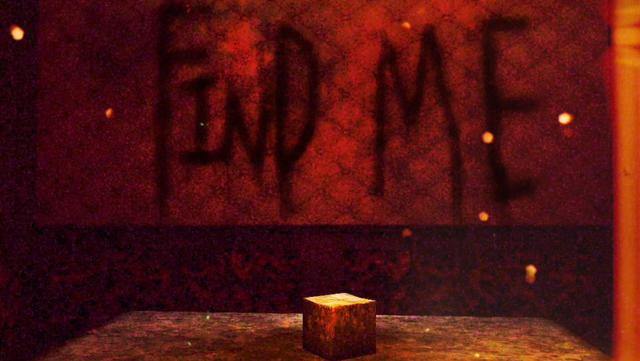
In the spirit of the season, I thought I’d bring out some horror games I’ve been meaning to review for some time now.  When you think of an iOS game, you don’t tend to think of horror, though.  Hell, most games you download through the app store have something to do with angry, flappy birds, smashing candy or playing with your jewels, but it seems that some people are opening up their minds a little.  Some developers are trying out something new with these media and seeing just how well they can excel.  In the case of Lights Off, they’ve created horror and made it even more personal.

LO_car

Some of the main things that stand out with this game.  When you start there is a rudimentary story presented, enough to get you into the game but little enough that you feel less than secure about what’s happening.  In Lights Off the main character says he got into a fight with his father, took his keys then left the house.  He then needs to remember where he left his tent since he needs to get out of town for a while.  Maybe it’s just me, but it really does seem like he’s implying the argument got really bad.  Perhaps he’s murdered his father?  I mean, I have had plenty of arguments with my mom, my dad my brothers occasionally my wife, but I have never had to leave town to sleep in a tent, which I keep in an alleyway, to spend the night in a “place where no one could find me.”  Yep.  Maybe it’s not just me.

While you are sleeping in the woods, you are awakened in the night by glowing red eyes.  This makes you wander around at night with a dying flashlight, trying to find a house that some disembodied voice mentioned in passing.  After stumbling around in the dark for what feels like ages, you find your way to the back of a house.  Inside you meet this big, black spooky being that reveals some things about you.  Like, for instance, you are a man.  No really, I had only a few indications to this, but up until I saw a photograph of the character, I was undecided about his sex.  The problem is that in the beginning sequence, when you search for the tent, the sound of the shoes on the ground sounds, to me, a lot like high heels.

LO_town

Later, when you are in the house, your character breathes so heavy, I thought he might need an inhaler.. or he might have just turned into a zombie.  Either one is a viable response.  But his breathing has a bass resonance that seems to sound like a man.  Originally, I was so confident that the main character was a woman that I was getting ready to talk about how I was glad to have a female protagonist.  Considering the implication of murdering the father, women usually have way more twisted motivations for killing their fathers than men do.

LO_parcel

Another issue I had with the game is actually just a double-edged sword.  This game has a fantastic ambiance, and it even suggests you play this in the dark with headphones on.  I wouldn’t recommend it since that might have scared the piss out of me during my playthrough.  One of the ways the game achieves its ambiance is through the liberal use of film grain.  It grants the game a gritty and chaotic feeling that you just don’t get with clean graphics.  It works great, until it becomes so prolific that you feel like you are wearing really really dirty glasses.  At a couple points the film grain got so bad that I had no idea where I was or what I was doing, and I even missed a couple of little scares because of it.  It was like “man I can’t see shit! O, that was supposed to scare me! Ahh ahh….. dammit..”  In earlier levels, the game also has a small area of vision within your screen due to the fact you are using a flashlight, which is really effective and creepy.  This worked out well.

The controls are one thing that I really have to applaud because you never see them.  The left side of the screen lets you walk by sliding your finger around and the other side lets you change what you are looking at by sliding your thumb around.  It is like having two joysticks you can see through to the game itself.  Well-orchestrated and it really did help me get even more into the game.  All this alongside the fact that the graphics were pretty good for an iPad app, and I would say that this is totally worth your time to check out.  Not to mention, this game is free on the app store.  Henry Sorren and Pulp Horror Games have a lot of other games up there, too.  Definitely a good team and you should check out their work

Henry Sorren has also been a sort of sponsor of The Crotchety Old Gamer, providing keys that I was able to distribute to winners in The Crotchety Old Giveaway.  Unfortunately, the giveaway ran for a good length and by the end some of the keys expired, which was a bummer.  Steam keys never go bad, but the app store acts like you are giving away fresh strawberries without any kind of refrigerated storage.  Bastards…

What Inception Says About Gamers

This article will fuck with your mind.  It is a personal opinion piece that I have cited the best I can given limited intellectual resources.  I wish I still had access to something like JSTOR from college, but a membership in such a database of works would require current membership at a college.  Oh well, hopefully you enjoy my machinations anyway!
deeper

When you dream, you set yourself aside for a time and drift down into the subconscious place of your mind.  There is an element of entertainment that allows us to do something similar, and it exists in a place you’d never guess: movies.  This mechanism of reality-alteration is known as the suspension of disbelief.  It means that while you watch a movie, you accept for the duration of the film that its reality is plausible and that many of the laws that govern our day to day lives are inapplicable.  Just as with a dream, reality is set aside to allow a false reality to be experienced.  By setting aside the judgments of the ego, you allow the film to supercede even yourself, just as your dream supersedes your personal consciousness.  But there is another form of this that exists, and the location of this is even more astounding: video games.  During a videogame, you willingly set yourself aside to allow the assumed identity of the main character to be taken on.  Many of us commit horrible atrocities during this state, too, but as a movie will not correct you to become more like a main character without your permission, you will similarly not become like the characters of game realities unless you will it.  But one thing that video games do is empower their players, and through the looking glass of the suspension of disbelief, players are delivered onto the doorstep of a self that is capable of changing the fabric of reality.  Video games don’t make you a person consumed by insatiable violence, but they prepare your conscious self to deal with reality.  They don’t make us the most violent people in the world, they make us the most powerful people in the world.

Through the suspension of disbelief, we enter a dream-like state where true reality is willingly set aside.  Now, comparing a dream to a video game, we are the player and the designers; but in Inception, a film starring Leonardo DiCaprio about shared-dreaming, there is a whole structure to generating the dream-world.  In this example, consider the “subject” of the dream to be synonymous to the player in a video game.

First you have the Architect, or the level-designer.  This person generates the world that the subject finds themselves in and makes it as convincing as possible to keep the person from realizing they are asleep and waking themselves up.  They have to get the dream-world itself down to such a perfection that every aspect will be believable, and the world is hemmed in by maze-like logical loops.  In this way, Architects are also like graphics designers, and, in the beginning of the film, we see the consequences for the first Architect for inadequately recreating those graphics, that reality.

The Architect’s function allows the Extractors to do their job and pull information out of the subject’s mind.  Another primary element of the dream is the device in the briefcase.  This object is never fully understood nor explained, but it seems to be what links the dreamers and delivers the sedative that keeps them asleep and allows them to dream so interactively.  This briefcase acts as the game’s engine in that it is the background mechanical element that makes the shared-dream possible.

During the primary operation of the film, where a team convinces Cillian Murphy to dissolve his father’s multi-national corporation, several other people are called in to help sustain the veracity of this dream-world.  Several of the team’s members are called upon to act as Architects, or level designers, for each dream-level that the participants descend.

Most important is the role of the Chemist, who serves as a sort of gameplay designer.  He makes a sedative strong enough to keep the team and subject asleep for the duration of multiple dreams.  He allows them to stay engaged, even if some element of the Architects’ constructions are flawed.  It is also this sedative that brings in the threat of mortal danger during the operation, as anyone killed can now stay locked in the infinite dream-world of their own subconscious.

Now, in this film we see one element that doesn’t seem to match this analogy entirely.  The projections, or people that populate the world, are all generated from the subconscious of the player.  But in a video game, the player does add something to the game.  Without the player, every element of a game is just a piece of a perfect whole, unperturbed by outside forces.  A dimension unto itself.  Only by the player breaching the space of this game do the decisions of the player tell the game where the world will go.  Now, some of these are inconsequential alterations; like losing a few missions for killing the wrong character, as is possible during the assassination missions presented by the story arc of colluding with the Dark Brotherhood in the Elder Scrolls series.  Some of these are serious consequences, such as destroying the entire settlement of Megaton in Fallout 3.  Either way, the projection of the player’s own subconscious self through the medium of their own actions, in a sense, populates the world just as the subject of Inception.

But what of being discovered by the projections?  When the player is pulled too abruptly out of the suspension of disbelief by unrealistic elements of the game, they might begin to behave as someone who knows they are in a game reality, which does not matter.  So they might just go on a rampage, kill everyone in sight and let the cops chase them, as in Grand Theft Auto.  It doesn’t matter, and they can just revert back to a previous save once they’ve had their fill.  Just as the projections in Inception, only to (normally) have them wake back up.  At that point, the player is entertaining the conscious ego that has become bored and knows it is playing a game, rather than engaging their true self and setting aside their personal ego.  Inception sets in one more ingenious piece of the development puzzle, which takes the form of the Forger.  The Forger is a person who, through the strength of their own imagination, is able to make themselves look like a projection of the subject’s subconscious.  The Forger on the operation is then able to engage the subject directly.  The Forger functions as a game’s AI, which is created to be as intelligent as possible to create a more immersive and believable gaming experience for the player by mimicking real intelligence thereby creating a higher level of difficulty.

At this point you might be wondering what what Inception, if anything, has to do with video games and how that ties back to reality.  Freud’s idea of the subconscious mind, or unconscious mind, as represented in the film Inception, is similar to a dark cave; and this is described aptly by Joseph Cambell in his book, The Hero of a Thousand Faces.

“The unconscious sends all sorts of vapors. odd beings. terrors, and deluding images up into the mind – whether in dream, broad daylight, or insanity; for the human kingdom, beneath the floor of the comparatively neat little dwelling that we call our consciousness, goes down into unsuspected Aladdin caves. There not only jewels but also dangerous jinn abide: the inconvenient or resisted psychological powers that we have not thought or dared integrate into our lives.”

In the film Inception, Cillian Murphy faces his own subconscious after being conditioned by the team of extractors.   They implanted the suggestion that his father wanted him to live his own life and not be like he was.  Lo and behold, when Cillian Murphy gets down to his own personal subconscious (perhaps ingeniously placed in a massive, technologically advanced vault), he sees a projection of his own father telling him he was disappointed Cillian tried to be like him.

Game developers are capable of the same thing, creating a narrative that we follow through a series of twists and turns, which mimic the dark and perilous caves of our own subconscious, to come to some conclusion about the character and the events in the game.  But because of the suspension of disbelief, we have been personally identifying with the main character’s struggles.  We have followed every twist and turn, and followed along with the narrative.  And, unlike in a movie where you sit impassively denying your own self for about 2 hours, in a game you spend several days engaged with this character.  In an article on Cinemablend, they arbitrarily throw around a range of numbers at 8 – 10 hours, it’s suggested this is part of a modern trend of shortening game-lengths.  Even at that length, you are talking about a length of up to 5 times the length of an epic feature film, which means more time for the player to become engaged with the main character.

In an attempt to utilize the game’s Photo Mode to capture cinematic pictures emulating his real-life works, Ashley Gilbertson recently “embedded” himself in The Last of Us, a video game that takes place in a zombie apocalypse.  It is understandably violent in a graphic fashion.  Gilbertson says in the article:

“To be successful, a player must be the perpetrator of extreme, and highly graphic, violence. I’m interested in a more emotionally engaged type of photography, where the human reaction to a scene is what brings a story to life. That was tough inside this game. Occasionally the characters show anger, though generally they’re nonchalant about the situation they’ve found themselves in. In the end, their emotions mimicked that of the zombies they were killing.  By the time I finished this assignment, watching the carnage had became easier.  Yet, I left the experience with a sense that by familiarizing and desensitizing ourselves to violence like this can turn us into zombies. Our lack of empathy and unwillingness to engage with those involved in tragedy stems from our comfort with the trauma those people are experiencing. […] I came away from the experience having learnt a couple of things: that the work I usually do is an antidote to the type of entertainment this game represents and that I suck at video games.”

I would argue, however, that Gilbertson’s statement at the end of the article is the most revealing: he sucks at video games.  Earlier in the article he describes how the game seems to make him feel ill, the reason he has to bring it into the Time studio and have his colleague play for him, handing off the controller so the photographer could take screenshots.

This means that Gilbertson was not engaging with the characters and not giving into the suspension of disbelief.  This is understandable since he obviously does not play video games on a regular basis, so it can be assumed he won’t be able to utilize the controller effectively.  He even describes the death scene with intense detail, likely earned by frequent visits to scenes where he is eaten alive.  In that he can only blame his own inexperience with gaming and the etiquette of the controller.

But his own experience is telling about the nature of gamers and gaming: if you do not sit down and take the time to work through the struggles of the game’s characters, you will not be able to associate with that character.  If you look at how old CNN suggests modern gamers are, you’ll realize they are adults with regular jobs, kids and real-world concerns.  This means that they might sit down with a longer game and play for short periods of time.  You know, in between laundry and diaper changes.  Even if they get in 1 – 2 hours every night or two for a couple weeks, that is still the amount of time you might spend with a friend.  Shit, if CNN is to be believed in that article, most gamers play online, so they very well could be playing with friends.  But those fictional characters in that fictional narrative are still characters that you are with.  And before someone says “but you control that character!  How can you identify with a puppet of your own manipulation?” First, you might control their actions, but it is generally understood that the actions of the player are the actions of the character that you guide between cutscenes.  Add to that the dialogue that you hear, and in some cases guide, and you have a fully contextualized expression of the player’s own personal motivations.  Mass Effect is a perfect example of this.  it is a game where you choose the general concept of what you say to others, and you have to choose carefully because in some cases it will get others killed.

My point is that if you play the game and control the character, your actions are inseparable from those of the character and, therefore, the ending to the narrative is a reflection of your own unconscious decisions as they guide this character.  Whether it has multiple endings or one ending, the ending of a game forces you to confront some logical conclusion, guided by the player’s own actions, of the narrative of the game.

Coming back to Inception, Leonardo DiCaprio has a discussion with his new Architect early in the movie at a cafe during a shared dream.  During this conversation, he tells the Architect that, during a dream, you are able to get in between the process of creation and perception to achieve what he calls “genuine inspiration.”  In the film, the only way to sustain this is through shared dreaming, but I submit that this could be an accidental allegory for the video game.  When a developer creates a game, they create an interactive experience that allows you to simultaneously create/manipulate  your world and perceive/discover it.  Of course, some games are too simple for this part of the discussion; but games like Skyrim fit right in there, allowing you to decide who is right and who is wrong in a political clash that shapes the future of the world, choose which missions you complete and when.  You can even personally design the facial structure, sound, race, skills and lifestyle of your own character, features that might draw you deeper into the character.  Hell, even Massively Multiplayer Online games are taking this angle, with Sony going so far as to create Landmark, a game where players have been helping to create the world of the company’s next installment of the Everquest franchise.

The point is, we are getting to a place in video games where one can get in between creativity and perception to achieve genuine inspiration.  Just as the singer in Wallace Stevens’ The Idea of Order at Key West, gamers are getting to a place where they are just as much creating the game as they are playing it.  But what does this mean?  Well, to put it simply, if gamers are able to create the game as much as they play it, it shows that they help guide the characters in games as much as they help shape them.  It is only a short step before they are able to apply this to themselves and make their lives a product of their own actions thereby making their own lives in the image of their imaginations.  And if enough people are able to do this, they will shape the world to fit the image of the imaginations.

Don’t think this is even remotely possible?  Check out game designer Jane McGonigal on Ted Talks and how she thinks that video games will save the world.  And considering that philosophers like Renee Descartes have been using thought-experiments to test or justify various theories like the “brain-in-a-vat,” video games provide a virtual space that multiple people can interact with simultaneously.  Recently, when writers spun rhetoric in publications favored by gamers, the gamers initiated #GamerGate, probably the most successful consumer revolution ever seen.  Even now, they are in the process of altering the fate of games reporting, and that discussion started back in August.  Face it: Gamers are simultaneously the most dangerous and the most capable humans on the face of the Earth because we have be trained to shape our own world to the image of our own imaginations, and they are taught by the most effective teachers in history: game developers.

 

Labzat on the Future of Gaming and GamerGate

GG_VJ

Editor’s Note:

The work that follows does not represent The Crotchety Old Gamer, but I felt that it would be relevant to share the ideas of other gamers from around the world. This is a translated text from Labzat: a Mexican gaming blog. I have been working with these guys to get my work translated into spanish and shared with a broader audioence; and in the spirit of #NotYourShield, I thought it would be interesting to see how gamers worldwide viewed this conflict. It is a little rough at times, but I feel like we share a lot of the same views regarding the situation. The following article has been edited for coherence by myself and translated by a natural Mexican spanish-speaker. Some things may have still gotten lost in translation.

La futura industria del videojuego

Its been a couple of weeks (or more depending on when you are reading this) since the beginning of the game industry’s social media revolution, known as #GamerGate. Many already know what this was about, but now that polemic has been diluted and all that energy of change has been expended on useless discussions. I want to analyze, from my perspective of a foreign gamer (cuz I’m not in the USA), what it means and what it could (or could not) mean for the industry.

The “corruption” of the videogame press

The firs topic within #GamerGate is the corruption of the press. Let me tell you this: I don’t think there is any sign of corruption, yes they are partial but it’s not the same as corrupt. When you write about videogames or any other topic, you always make relations, maybe of friendship or love. It doesn’t matter, the point is that you always have people that you prefer over others. Every media has an editorial preference for some kind of information. For example, my blog Labzat gives preference to discourse about the game industry in México, Spain, and Latin America because it’s my interest to promote the game development in these regions. If there is a private relation between a reporter and a game developer, nobody has to care about it, that is an element of their private life, and it’s hard to say that it interferes with work. Why is that? You could easily say a certain game is “the best,” but the readers have their own voices and opinions; so if you are not objective, they will simply stop believing you and you loose your readerbase. And trust me no body that survives by writing about videogames wants to lose readers.

Where I see a true conflict of interest is in the sponsorship the big companies provide to the videogame press; you won’t care about being impartial when your income is provided, not from the traffic on your page, but from contributions paid by Microsoft or Sony to promote their games. Then you go from being a serious analytic reporter to the slut PR of a company. This produces a decline in the quality of articles: the very short space the indie developers have to promote their projects and the rising of fanboy trolls who just reinforce the idea of gaming as an antisocial activity. Yep, what they blame the whole society for is just the product of their own system. Also, this monetization model sucks because it means indie developers need to pay for reviews to get substantial attention. A couple of times, I have heard rumors in the Mexican indie scene that you have to pay to get reviews. I’m not sure if it’s true and I’ve never seen it directly; but if it is true, we are killing small studios and a lot of new perspectives on the future of gaming.
To solve this, we need to band together as a community and create a new press structure for the highly specialized sector of the infinite universe that is gaming nowadays. The press should also find new ways to monetize in order to be more independent from big companies. Trust me, much more impartial is the site that relies on Google Adsense and ads from other sectors of the gaming world than those who are branded by big companies.

The immaturity of the community and their opinion leaders

Yes, it’s true. Some gamers are just immature, aggressive guys. But don’t forget that most of the games are created with the belief they will be played by a public of 15 to 25, and I feel very conservative about this fact. Unless American teenagers at one point expressed their inconformity and arguments in a clear and polite way (something I have never seen in my life), I think it common sense to expect aggressive reactions to critics discussing videogames they love to play. In fact, I know adults that still react in a violent way.

But I care as much about the visceral actions of the masses as I care for the immature and superfluous declarations of the opinion leaders in the game industry. You can’t be a public figure (as Phil, Anita and Zoe are public figures) and talk without thinking or studying themes like sexism & harassment in a completely serious way. When I read the Phil tweet that states something like “Gamers are the worst, you should nukem them,” I should just remind him of that German dictator who said “the Jews are white collar criminals, lets persecute them.” It might sound like a joke, but declarations like this grant it a whole new level of gravity. A lot of wars have been started because of harsh and careless words.

On the topic of speaking without thinking, Anita basically seems to claim that all games which represent women in a way she dislikes are misogynistic. She sounds like a religious leader who claims her religion as indisputable truth, then sends her followers to vanquish all other religions from the earth. She just says a lot of things then blames gaming, seeing only the surface of topics. I want to see what she thinks of Shakespeare. You know, the part where Othelo kills Desdemona with his bare hands? Or how about Lady Macbeth being the evil force behind all the tragedy of Macbeth? She attacks videogames because developers are nerds who read comics, nearly anonymous to their own audience. I doubt she’d expect a truly intellectual level of discussion, but learning she was artificial and contrived, a lot more voices would likely rise.
Both sides of #GamerGate have made mistakes, but I’m optimistic because I believe that eventually the voices of the trolls and pseudo-intellectuals will vanish while the other side of the community, those without the attitude of children, begin to participate more.

The incapacity of the industry to reach a new market

The videogame industry probably grown the most in recent years; In fact, I’ll bet it’s bigger than pornography. Just imagine that. But when we read articles of the videogame press, it seems that the major industry is always on crisis mode. Like Third World countries, they have a lot of wealth while they simultaneously have a lot of economic problems. Fortunately, it’s easier to understand what is happening in the videogame industry than what goes on in the Third World. The industry is growing up thanks to the new models of distribution and the accessibility to tools to develop games.

But the ones who reap the benefits of this growth are neither the studios, the pulishers nor the gamers. So who benefits? Easy. The digital store owners. They just created a new consumption and production model. A lot of developers produce a lot of games that get distributed at a very low prices because supply is much bigger than the demand. So the gamer gets a lot of games at very low cost or free. They’ll log maybe an hour of gameplay, then forget about them. At that point, gamers don’t play games, they just store them.

When the press writes articles stating “gamers are dead,” they are writing about the gamers who play games and give them the value of a book or a movie. The ones who play to improve their skills on Street Figther, to collects pokemon: the ones who play epic adventures and share it with their loved ones because it was significant to them. It’s sad to read that we have no value to the major press or major companies because we are too few in economic impact for them. But it gets worse! They blame us for their mistakes, for their incapacity to reach the new public that Google, Apple and Steam do! We are not the problem. The problem is yours for generating shity games and reviews. We used to pay more for the games when the games were well-developed and the story, music and graphics were respectively epic, when they cared to utilize the best of technology, give us the best mechanics and polish their code lines to a blinding sheen: When they cared about the game experience. And, yes, we would buy fewer games, but paid much more for them.

It’s fair to recognize, though, that not all the fault lies with the companies, but that it is also ours. We accepted the new system of gaming, of being treated like thieves. We support incomplete games, and never complain about the laziness of developers or the ambition of CEOs. We just sat and and let the industry turn into a bunch of FPS with sepia tones and puzzles F2P. Now what can we expect for the future? I think the industry will turn into two: the massive, fashionable games and the elite games for a very specific public: mimicking the modern film industry.

Influent, Game of Language Learning

INF_logo

Something that I focus on heavily here is the artistic quality of games, but there is so much more promise and potential to videogames than just art and entertainment.  This Kickstarter-funded piece of educational software displays that games are tools for learning as much as devices of entertainment.  It’s not a perfect language-learning game, but it’s definitely a step in the right direction and a hell of a lot cheaper than Rosetta Stone.

Influent is a game that would, by normal gaming standards, be considered an educational tool because it is.  When you buy the game, you get to decide which language you want to give yourself a primer for.  To begin with, Influent does not teach you alphabets.  I already have some pre-existing knowledge of Korean and because I participated in the Army’s rigorous linguistics program, I know exactly how your brain learns languages because I had korean jammed into my skull so hard that two years after my last tests, I still slip into korean from time to time.  My biggest problem is that I don’t really have direct access to vocabulary lists, so this definitely helps in that way.

Why do I own three shirts but I've got twelve sticks of deodorant?

Why do I own five shirts but I’ve got twelve sticks of deodorant?

The way that you ‘learn’ in this game is by clicking different items with your mouse.  It then appears down below in the written format and someone says it to you.  The korean speaker has a hard time differentiating between the hard and soft sounds, but, whatever, I know enough to sort that out myself.  Once you have a word you want to remember, you hit the spacebar and it goes to a language list.  I tried sorting my vocab into neat lists like “clothing,” “food” and “things a baby might stick in its nose,” but things are sorted out in this game in a way that makes sense for life, not tailored to making little lists.  This is a plus because if you learn vocabulary in a certain context, you might have a hard time remembering it outside that context.  Right-cliking things in the world interacts with them, like opening doors and such.

Sometimes you will need to break apart a collection of items.  Luckily, the game has sorted this challenge out pretty well.  In order to select something that is a part of a whole, you hit ctrl to identify this, like the pillow on the bed or the leaves on a tree.  There is also shift to crouch so you can see things placed under the bed or in a cabinet under the sink.

Once you have your sloppy jumble of words that you’ve heard, it’s time to start trying to sort this stuff out.  There are two modes of mastery: time attack and fly by.  Time Attack is a mode that will time you on how fast you locate the words in the environment.  It says the words and you have to run around like a lunatic looking for them in the apartment.  This is a useful tool, too, because it lets you choose from a list of ten vocabulary words, which you will remember discovering them, even vaguely, in that order, so your brain lays those pathways pretty deeply.  Another feature of Time Attack lets you choose a randomly assembled list that the game concocts for you to identify.

The black vocabulary box OF DOOOOOM!!!!

The black vocabulary box OF DOOOOOM!!!!

Now, it’s good that you want to sort through these lists, but as you find the items, the words appear saying what it is, and someone says it.  It is easy for you to get brain-lazy and depend on that, though, and eventually you are going to have to start stripping the training wheels away.  This can be done easily, and the game encourages you to do it through the use of achievements.  When you do time attacks you’ll want to start getting rid of the visual aide because that will teach your brain to start identifying what those things are just by hearing them.  This is good because, most of the time, you will be hearing language and not reading it.  It prepares your brain for hearing it.  Take away the voice and leave the visual aide in order to learn the words based on sight recognition.  This will be important for learning to read the language.  I am not sure if you can disable both the audio and video for Time Attack to try in some kind of Hellen Keller mode, but the game doesn’t come with a module that signs vigorously into your hand.

Time to zap the fuck outta that vocab!!

Time to zap the fuck outta that vocab!!

Fly by is a mode where you learn vocabulary by piloting a little toy spaceship and zapping the item in question with the lasers.  Hitting control in this mode still works just fine, and it even slows down the speed of flight so you can adequately identify what you are trying to select.  Hitting shift will just make you fly faster.  Be careful, though, because you can crash the ship, which is mildly frustrating as you wait for respawn.

Overall this is a game that clearly has some thought put into it, but there are many limitations.  First off, there are a buttload of nouns, but there are only 5 adjectives and 5 verbs to learn in any language; in case you were unaware, most of language is fucking verbs and things placed to make the nouns interact with each other.  On top of that, this is not a language-learning game, so much a language supporting game.  It is great for studying up on your vocabulary and such, but it does nothing whatsoever to show you how to arrange those into a sentence and then use it to communicate… you know, the purpose of language in the first place.  No language is spoken by a bunch of people standing in a room identifying objects, although that reminds me of an episode of Star Trek for some reason.  On top of that, the game will show you the language as it is written, which is fine for most European languages as they all use approximately the same alphabet.  But if you want to learn something with a totally different alphabet, this game offers no assistance.  It just shows you how it should sound and what it looks like.  If you want to learn how to write that down, it’s on you.  And one thing that ANY student of asian languages can tell you, the stroke order is just as important as learning what to write.

You are correct, sir!

You are correct, sir!

If you need a great study aide, this game could be a great tool to include in your language-learning kit, especially if you’ve grown up playing games that teach you how to do math or something like that quickly.  I know I did.  Math Blaster was hard as fuck!  The thing is, this game has you trapped in your apartment and it is kind of depressing because you can almost tell what happened to this guy.  There is a report left on the printer, right?  Your door is locked and there is a newspaper and a ton of adverts for food places.  This is a guy who recently gave up on humanity and has decided to sit in his room all day learning languages from the disembodied voices in his head and the hallucinations in front of him.  When you pilot the jet in fly-by, your character disappears entirely, meaning that he is totally losing association with reality and even himself!  Then he runs around the house identifying various things in the house.  Fuck the cat, that thing never moves, it must have died long ago, sad and hungry because the owner lost his mind.

Or maybe it’s just a language -learning game that focuses on a small list of vocabulary to get you started with a new language.  Still, it would be nice to have various DLC’s that I could download for free according to new areas that pertain to real life.  I wouldn’t be able to ask about a library or a restaurant or anything.  It’s like a linguistic curriculum with only 10 different lessons.  But if you want to walk away from this game with a bit more of a vocabulary, it’s definitely helpful.  Check it out on Steam for only 9.99$ per language!

The Secret Cove, Former Deckhand Gone Indiana Jones!

SC_logo

I was looking over this game and deciding whether or not to back it on Kickstarter and decided I would let me wife, the more casual gamer, decide whether we would back it.  She likes to play games like this on her ipad, and I figured, since it is her area I would let her do the honors.  She watched the teaser video and her face started to glow so brightly I needed to don my shades.  She practically ripped the mouse out of my hand so we could back it!

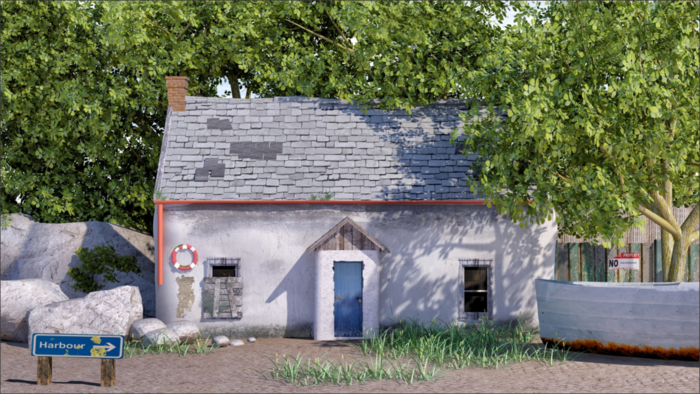
The Secret Cove starts as all respectable adventures from the UK start: a night of drunken reverie in a pub.  On this particular night you listen to some fishermen tell the tale of a lost smugglers’ treasure, so you decide to go all Indiana fucking Jones and look for it.  You wake up on a beach (I’d wager your butt hurts from a forgotten debacle with the fishermen) and your character starts to analyze his life and wonder where he went wrong.  After all,  to end up an out of work deckhand he must’ve missed a good pointer somewhere.  At least your house is nice.

SC_house

The boarded up window is a conversation piece…

Well, fuck it’s a lot better than the house I don’t have.  Either way, your character sets out to uncover the lost smugglers’ treasure.  Throughout this sleepy little fishing village you’ll find connections to witchcraft, smugglers, intrigue and mystery.  The world in this will be non-linear. Have you ever played an adventure game?  Often they more or less leave breadcrumbs along a specific path that leads your through the plotline of the game.  You don’t really take part in a developing story as much as you are a sightseer on a virtual tour group of yourself.  The Secret Cove will be a large and open world composed of about 100 scenes you can interact with.  As you progress, more and more of the world becomes accessible.

Fuck!  I knew these ancient binoculars were a scam!

Fuck! I knew these ancient binoculars were a scam!

An interesting feature is that the puzzles will remain as relevant to the real world as possible.  I remember playing a game where I had to tie a rope to a sword to create a sort of grappling hook style device so I could climb up out of a subway.  It wasn’t exactly intuitive.  Granted, that was a comedic adventure, other adventures I have played impeded progress just by making puzzles backward and non-intuitive.  When that happens it makes the player feel cheated and a little stupid.  These devs have decided to go with puzzles that are difficult and still make fucking sense to the character.  Like welding metal together or fashioning a crowbar in a town with no Home Depot (hardware store).  The game makes sense and it is all relevant to the work of a British deckhand.  Well… former deckhand turned rogue archaeologist.  Another thing to consider is that some of the puzzles will be inventory-centric item combining puzzles similar to those found in Zork.  These are fun and you end up with a lot of items one you, but it is fun knowing that you had the answer in your backpack the whole time!

SC_weld

Perfect! My robot penis is complete!

This dev duo known as Cheeky Sprite Studios is working hard to make this game, and they’ve even enlisted Richard Douglas, professional composer, to work with them.  That soundtrack is available as a backing incentive, too.  Their long list of incentives includes things like getting into their credits, having your name etched on a cave wall, the game (duh), artbook, soundtrack and much more.  Want a little taste of what the game will feel like?  Check out The Secret Cove’s website!  Part of these types of games is getting associated with another lovely locale, and this is no different.  The secret cove will feature locations and scenes from well-known Cornish towns and landmarks like St. Ives Wharf, Padstow Harbour, Minack Theatre, St. Michael’s Mount, Eden Project, Lost Gardens of Heligan, Tintagel Castle and many more.

They have some pretty neat stretch goals involved, including getting this game on Steam Greenlight and having artifacts that will give you something on their website, so come join us on an adventure!  It’ll be a lot of fun, and I promise you can bring a bag of wheat thins to snack on.

Spice Road, Culturally Confused Economic RTS

SR_logo

If you’re like me, few things give you greater happiness in life than looking down on an anthill and watching them run around collecting food, attacking other bugs and working the land.  Occasionally it’s fun to spit on them or zap them with a magnifying glass, but even that is just to see how their society absorbs the blow.  Spice road is a game that allows you all the fun of watching an anthill, except that the anthill is full of people and they are establishing a regional trade-network.

To further enhance the insect-oriented analogy, the game regularly quotes economic magnates such as Donald Trump, Lee Iacocca and others.  This gives you the feeling of being a money machine without having the crappy toupee.  If you have a toupee, you have my sympathy.  When you start the game, you are looking down on a region that is clouded by fog and filled with possibility.  Your initial task will always be to establish a town, which will be your primary base of operations.  City-building is a major part of this game, and it is a lot of the fun.  As you build your towns bigger and bigger, you will have more people come to live in your town.  Pretty basic shit, really.

Aw, fuck no.  I am not going into the mysterious clouds of fog!  There could be naked cannibals in there!

Aw, fuck no. I am not going into the mysterious clouds of fog! There could be naked cannibals in there!

Some of the first things that you will build at any settlement will be houses, for the plebs, and scout camps, for innocent exploitation.  On the region screen, you will see your scouts appear as little blue bullet-shaped things.  While your scouts meander the terrain, they will discover resources, which appear as white diamonds.  As you uncover these resources, you will be able to establish more and more resource buildings.  Now, having fucking resources is great, food gets you more people and makes them happy, alcohol lets you get drunk at the saloon etc.  You will be able to manufacture goods from ores you mine and have a full, booming industry.  The thing is, you are in this game to make some serious fucking money.

This is where trade routes come in and make things more interesting, simultaneously making your settlements much fucking weirder.  To start trading, you have to build “trade route” buildings (The names of buildings in this game are pretty abysmal but it is still fucking fun).  Setting up the trade routes will allow you to trade with foreign trade routes (they appear as white arrows on the edge of the region map), other towns you may have set up or other factions.  Sure, you can set up a town and make that your only area of operation in a region, but that makes things a little lame.  If you limit yourself to one town, that limits how much money you can make.  Not to mention, if you can get closer to the foreign trade routes, you’ll have a significant advantage over competitors.  And on top of that, controlling a majority of resources in a region will (fucking obviously) give you an undeniable trade advantage over competitors.  So getting a couple towns, maybe even just a small trade camp or two alongside your towns, will put you above the competition.

Yes! Make me money!

Yes! Make me money!

Now, not everyone is capable of building a massive trade empire and making money appear out of nowhere.  There are some men who just want to watch the world burn, which is where bandits come from.  These guys are fucking annoying, and they will attack your trade caravans.  First, you have to find them, which can be quite a fucking chore; but if you have little angry-colored arrows going after your trade caravans, all you have to do is build a few extra scout huts and they will locate them.  All finding them will facilitate is a solution.  You can pay them off, but as you make more money, these parasites will want more, so paying off a bunch of bandits all the time is not a long-term solution.

Eventually you want to cut their throats and leave their corpses in the sand for the vultures to feed.  You can build a number of public-order buildings like armories and watchhouses to keep your citizens in line; but to deal with external threats, you’ll need to construct a few barracks.  These babies create expeditionary forces that you can use to guard caravans and murder bandits.  Once you have a few of them built, you can go to the region map and select the bandits’ camps to begin negotiating with extreme prejudice.  This is also the final solution that you’ll end up employing with competing trade-nations, because no one likes to share profit!

The goal is to not have your soldiers turned into bones.  That is bad...

The goal is to not have your soldiers turned into bones. That is bad…

Meeting some of the goals set out for you in the campaign is difficult, but once you get the hang of it, the game is a lot of fucking fun.  You can build a vast empire that encompasses and entire region and vie for control of trade routes, like a true imperialist dog!  You’ll also be able to unlock new buildings and upgrade your existing buildings.  For those more keyed up by micromanagement, you can go into each caravan, see its trade statistics and monitor the number of camels in a caravan to optimize the amount of money you are making vs. how much you are spending to get your camels out there.  Chaining trade across a region also becomes useful as having a smaller town is good just to get your main town into contact with a closer trade target and so you can trade across undiscovered areas.  There is a lot to do in this game, and it is a lot of fun for anyone looking for a great economically-driven RTS.  Combat is an option, but not the main thing.

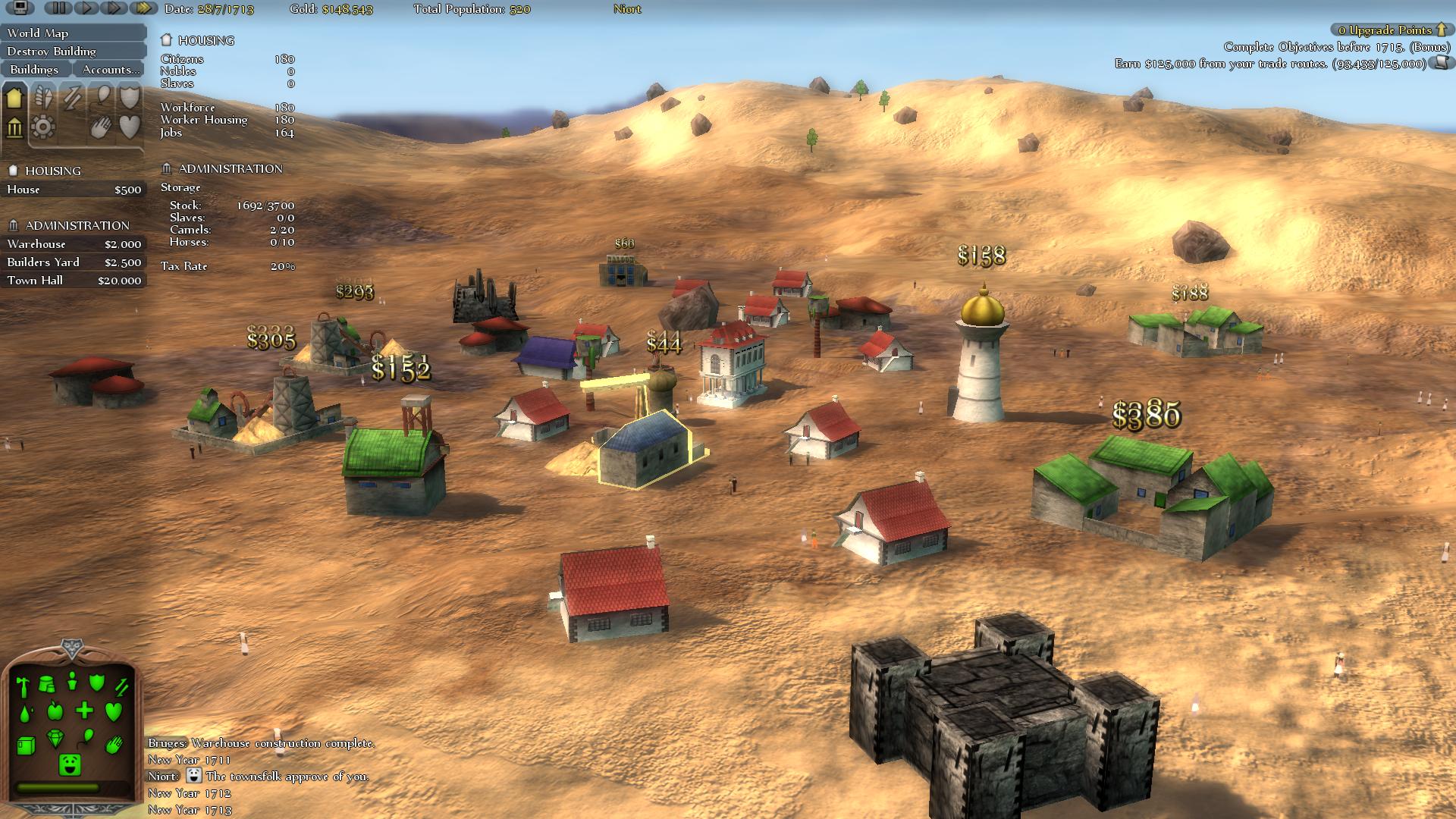
Looking at the title of this article, you might be wondering what the fuck this game has to do with cultures.  Take a closer look at your town once you get it decently-sized.  Looks neat, huh?  Nations are mostly named after european powers like Burgundy and Moldovia.. You know, all the really important trade powers of their time.  The buildings that you use for trade routes look like these middle-eastern spires from downtown Baghdad and then there are these old-timey, wild west saloon that you build for your peoples’ recreation.  The town hall looks like a plantation from 1880’s Confederate America whereas the religious shrines are either little Ottoman-domed structures or Christian chapels.  Each settlement looks as culturally tangled as a set from Firefly so that you think one half might initiate a Jihad on the other half at any moment.  I was confused and a little terrified, but it just looks like a lot of ideas came together to make this game happen.  This is the only thing is suffers from is a serious thematic disparity.  If everything were added together and you told me this took place in a post-apocalyptic wasteland, and made things look like that, it might be less confusing.  But as it stands, it seems to be pulled between some kind of Age of Exploration and Age of Imperialism discussion with wild west tossed in there somehow.

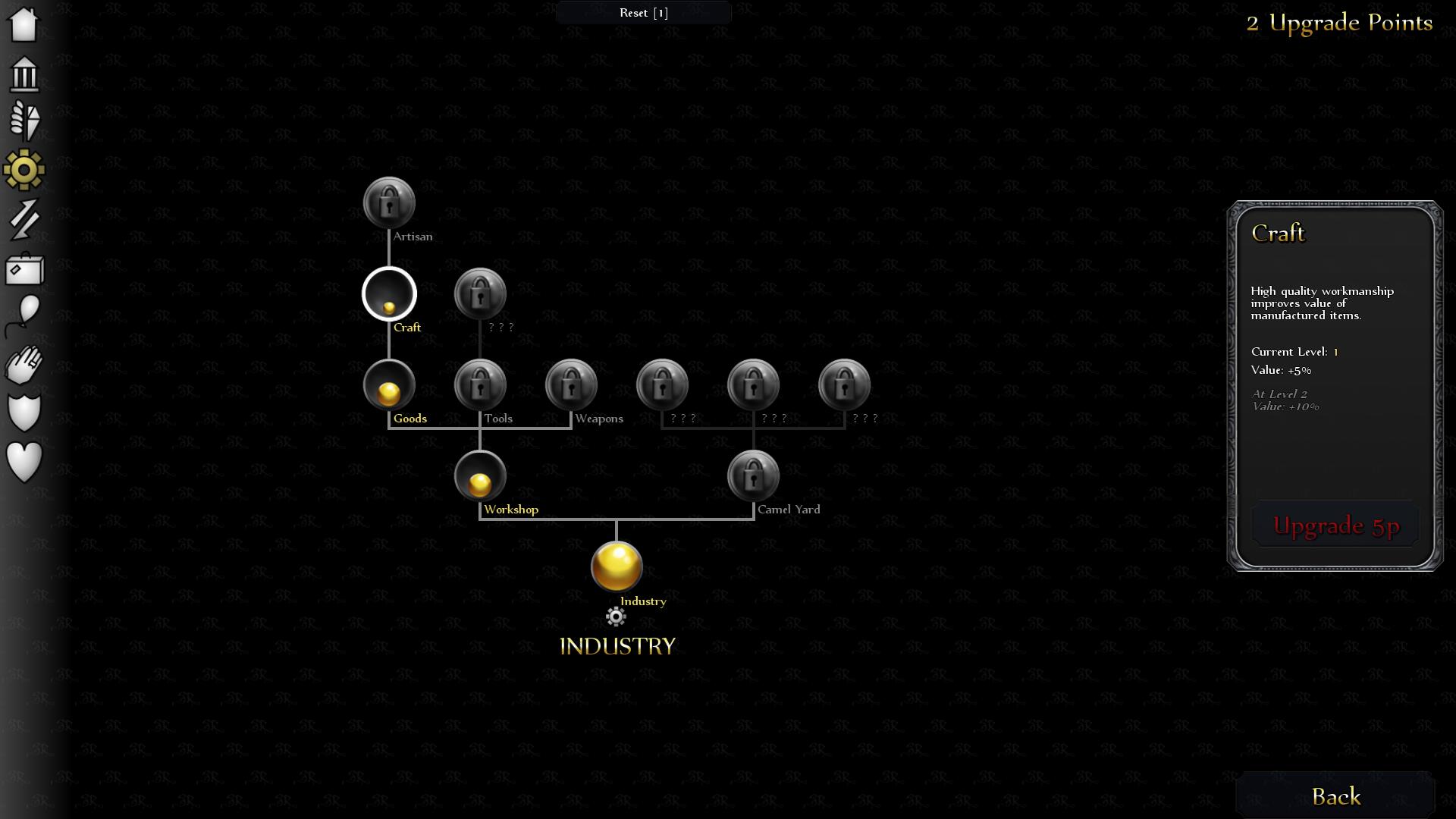
Dammit!  Where is the level tree for nukes?!

Dammit! Where is the tech tree for nukes?!

Overall, if you are the type of person that likes to win an RTS through economic dominance and politics, this is a game for you.  There are a lot of features that add to the combat aspect, but combat is not directly controlled.  There is equal development to the city-building, economic and political aspects and it constantly allows you to find ways to make money.  The art is a bit on the minimalistic side, but enjoyable.  Music feels a little generic, but the overall design of the game itself feels and looks clean.  One feature of this game is that it eases you into the greater game fantastically.  It is complex and easy to fuck up, and the game itself gives you a number of goals and levels to screw up before you get to the game itself.  Steam will sell you this game for only 19.99$ and I will tell you, it is worth it.  Check this title out, it was a lot more fun than I expected it to be and is worth a few plays!

Legend of Grimrock, Tearing Out RPGs by the Root

LoG_logo

Before all the cutesy, fluffy shit that inhabits most RPGs these days, before Final Fantasy and JRPGs had infested every corner of the genre, there were dungeon RPGs.  And they weren’t the Diablo-style one-button RPGs that breed tactical laziness; that’s right tactical fucking laziness.  Diable RPGs are allow for a wider range of motion and strategy, so you can hem enemies in with firewalls and nuke them with fire or something.  Tactics requires the careful execution of a concerted attack effort.  A small group of doomed warriors in a massive dungeon have a solid understanding of tactics.  They know if they break ranks and get isolated, they are doomed.

The first and last of these types of games I ever played was Eye of the Beholder, a game we played on SNES.  In the game, you play a group adventurers exploring the sewers of a place called “Waterdeep” to cleanse some ancient evil.  We did not understand the alignment system although we often chose whatever we wanted and joked about it like kids.  When we were in the game, we never got the gist of how to play.  We would throw our gear at enemies since it was the only way we knew to deal damage.  Eventually it got to where we were disrobing and throwing our clothes, desperately trying to kill the foes.  That never ended well… But we were idiotic 8 and 9 year-olds.

Grimrock makes a lot more sense to me.  Controls are easy and you barely need a tutorial.  Just click around, left click picks up an item and releasing it mid-screen will throw that item. Right-click to attack or to throw a weapon.  Everything is a pretty straight-forward RPG style and this makes combat more exciting, too.

Wait! I left the garage door open!

Wait! I left the garage door open!

When you start the game, your characters are assumed to have performed some transgression against King and country.  The vague nature of the opening titles leave you to think you could have raped the Princess all the way down to eating the last piece of strawberry cheesecake.  Doesn’t matter.  You’re fucked and they push you down a hole.  Best part is, at the top of the mountain Grimrock your crimes are all forgiven and you are free.  But the only way down is to descend into the bowels of Grimrock.  Oh, by the way, no one has ever fucking survived.  That’s ok, I don’t usually come for the accommodations anyway.

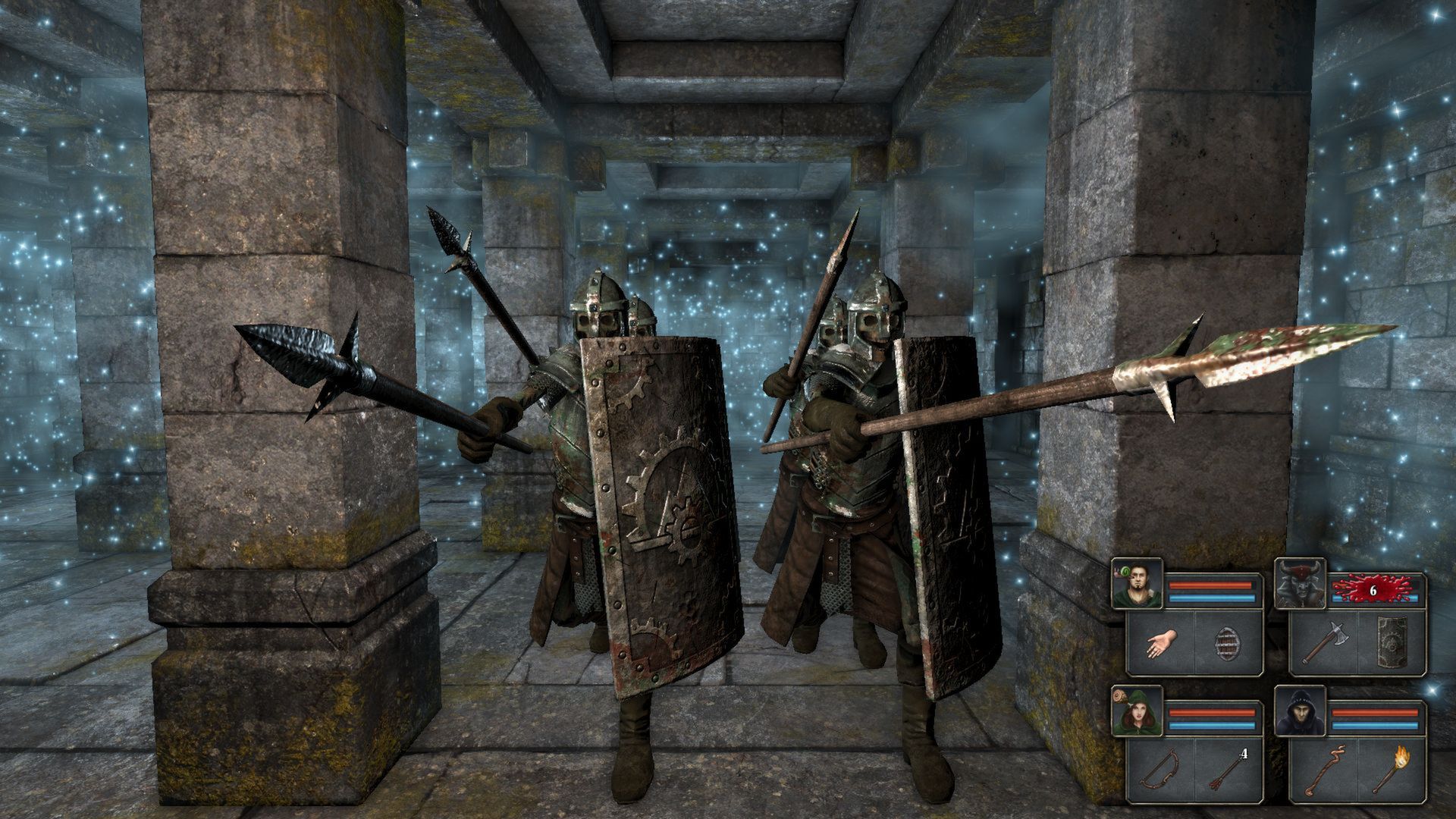
Down in the dungeons, you have to navigate labyrinthine corridors filled with unspeakable monsters, like giant snails, gargoyles, mushroom herders, little magic-casting mushroom guys, undead soldiers etc.  Each creature adds its own challenges to combat, and one should consider combat a feat akin to dancing.  If you just take two warriors and attempt to plow through, axes and swords swinging, you will end up a dusty pile of bones.  Many enemies are able to out-number you, out-damage you or can take a hell of a lot more punishment than you can.  Did I mention you are all prisoners?  Yea, this means they pushed your ass down in the pits with aught but your chapped asses to defend yourselves.  As you progress you’ll find the sparse weaponry left behind by other bands of hapless adventurers, so you’re not exactly a keen-eyed fighting force armed for rigorous combat.  The most common early ranged weapon is a rock while the most common melee weapon early on is a fucking torch.

When enemies come at you, the best thing to do is to lure them off one at a time where possible.  As they round corners you can stab them before back-pedaling toward an open area.  As you back pedal, you can throw rocks at them and ready up a spell.  Spells are a devastating way to deal damage, but you can’t unlock spells with the spellbook until you find the appropriate scroll, which can be frustrating.  Once you get them, though, they are profoundly useful.  Be careful, too.  If someone in your party dies, you’re all fucked.  Sure, you can keep going, but you’ll be needing the full group throughout the game.

Spartans!! Fuck this place.. tonight I'm eating at Denny's...

Spartans!! Fuck this place.. tonight I’m eating at Denny’s…

Character customization is excellent, and you can choose between human, minotaur, lizardfolk and insectoid.  I usually pick two humans, a minotaur and a lizardfolk.  I like having two rogues, as this allows me to have a ranged rogue and a dps rogue.  You know, for extra damage for the rogue since rogues prefer it from behind.  Then there is my mage, human female full of glorious spellcasting magery, and likely the smartest of the entire group.  Finally, I like to take a tank, too.  That is my minotaur.  He has a trait called headhunter where he gets extra damage for collecting skulls.  Finally a use for those useless collectible items!  I also use the minotaur for a pack animal, since they also get major strength bonuses.

The ambiance is terrific, and you get the sense of an ever-present evil throughout the game.  All the time some dark whispers can be heard in your ear, muttering in a chthonic  language some horrid curse, luring you deeper into the dungeon.  The music in the title screen also brought a tear to my eye the first time I heard it and filled me with the glee of a glorious adventure.  Throughout the game there is little more than ominous noises.  Sometimes you can heard the groan or squeal of some distant creature lurking about, waiting for its next meal to come trundling down the corridors.  There is also the fantastic element of eating whatever food you find lying all over the ground, like some kind of mad baker was damned to imprisonment here and he found some magical means to leave bread everywhere.

Hm.. I guess the Keebler elves didn't make it too far either...

Hm.. I guess the Keebler elves didn’t make it too far either…

One of the things this game does really really well are secrets.  Notice how the walls are all constructed of a similarly-colored, moss-grown mortarless masonry?  Well, every once in a while you will see a chink in the stone or a brick out of place.  Click that shit!  Somewhere nearby a door will open and permit you access to a secret room and you’ll get some badass loot, much needed food or a magic scroll!  It takes me back to the old days of Wolfenstein 3D and Thief: The Dark Project where you had to just run along the walls at a certain angle to open secret doors or cut down every wall-hanging you could to unlock secret doors.  I find the best way to search for secrets is to stand in the corner of a room and look from afar.  Secret switches are pretty obvious if you know what you are looking  for, but they can often be just as easily over-looked, so stay sharp!

Probably the only thing that bothered me about this game was the straight-forward manner of the enemies.  This game could be very well served by some wall-lurking enemies that you don’t see until you are right up on them.  Granted, the current combat system would make that a tad difficult, but putting in enemies that climbed out of grates as you walked by or changed from statues into flesh and blood foes when you walk past them would make this spooky game into a fantasy-horror adventure.  Don’t mind my little intrigues, though.  This game is worth every cent you can throw at its creators.  It is a load of fun in a genre that I have not seen since I was disrobing for battle.  On Steam this game is an overly-reasonable 14.99$, but wait there’s more!  This game has a community of dungeon-dwellers who create new content and new levels and games with the map editor of Grimrock!  It’s fucking fantastic.  And THEN you have Legends of Grimrock 2 to look forward to!  Just in time for Halloween!  You can pre-order it now!  Screw trick-or-treaters!  Crawl the dungeons and unlock the treasures within!

The Best Rash I’ve Ever Had

RR_logo

When I was a kid, my friend would come over with a copy of Road Rash for Sega Genesis.  We’d race for hours while beating each other over the head with any number of clubbed and bladed implements.  Ah, the joys of youth!  It has been many years since and I hadn’t even heard the name of this spoken, and I had begun to wonder if it was ever real at all.  I played Twisted Metal on the Playstation and any number of other games that tried to emulate it, but none that tried to recreate the balls-to-the-wall motorcycle racing gauntlet that was Road Rash.  Then yesterday, it happened.  I heard of a projecton Kickstarter that was to emulate this game, and it had already reached its funding goal.  Its name was Road Redemption.

In this title, you will be playing a Katana-clad member of a mid-western America motorcycle gang.  You have to move your way up in the ranks and take control of drug trading routes.  It’s a visceral title that will actually hit harder than its spiritual predecessor.  Thing is, it won’t be made by the same people that made Road Rash.  In fact, a lot of these developers grew up playing games on the same systems I did, so they remember the good old days of games that make you earn their respect rather than the spoon-fed titles of today.

Who says real badasses never look back at an explosion?

Who says real badasses never look back at an explosion?

This looks like a title that will take esports to an awesome new level and bring people away from their Xboxes and Call of Duty.  You’ll earn money by racing, sure, but if I can wield a shotgun on a motorcycle, why would I just want to race all the time?  Luckily there will also be assassinations, robberies and other challenges.  Getting the goods will allow you to level your character, buy better hardware and upgrade your bike so you can really take on the tough guys.

The storyline is a sort of made-in-America Mad Max routine.  You are part of stated motorcycle gang in post-apocalyptic mid-west America, and the country is run by a ruthless dictator.  You gang-leader decides that it would be a great idea to ride into the capital with the intent of killing the dictator.  I guess it doesn’t go too well, since the game description implies heavily that shit hits the fan for you and everyone you know.  You then have to track this guy down and, pending his judgment at the gang’s hands, decide what to do about the whole dictator situation.

RR_flying

Flying blurry men never did know how to ride bikes well…

One of the more vague features of this game comes with the life-system.  There will be no extra lives, but the experience, gear and upgrades you earn should stick with you.  What does this mean? Fuck if I know, but I guess you have a lot of family members who are willing to step up and take over your cause.  You’re probably from one of those massive Irish-Catholic families you see all over television.  What’s more is that multi-player mode will be all about you building your gang and then taking to the internet where you will join up with or against your friends.  Hey, competition is just as much fun as working together, sometimes.  Personally, I cannot wait to throw someone under a bus.. fucking literally!

The best part about all of this?  Road Redemption comes out tomorrow on Steam as Early Access.  So get those bike helmets ready.  We’re info for one hell of a ride.  Get ready for the best rash you’ve ever seen!

Dwarfs!? Man-boobs of Glory

DW_logo

Tripewire, the same looney bastards behind Killing Floor and Red Orchestra, are the ones that made this game.  It still has me scratching my head, but I try not to think about it too much.  This game, like basically everything else they’ve ever made, is a lot of fun.  It is sn RTS simulator that really lets you sit back, relax and control a colony of dwarfs.  As per the usual mythology, these dwarfs all seem to be male, though the thought of a bearded woman just kind of creeps me out.  Either way, you are talking about a magnificently man-boobed populace out for some digging!  Check out more about the game on Steam or the game’s site!

Ale, Gold and a Pickaxe are the three things necessary to sustain life for a dwarf.  These beardy little buggers probably eat dirt, since it seems to disappear and mysteriously produce gold.  So the game starts with the town hall, which produces the only two types of dwarfs in existence, diggers and warriors.  Your town hall sits on the only green patch of land in a massive cavern and just produces diggers via spontaneous generation, most likely using the combination of dirt, gold and ale.  As each of these dwarfs magically appears, they begin wandering aimlessly around digging randomly with their pickaxes.  At first the game feels like an ant simulator, but then you realize that these dwarfs have no real system and they live only to dig like robots and find shiny objects.

For the most part, this game is peaceful, but there are spontaneous issues you might experience like a subterranean version of Sim City.  First there are the natural disasters: lava and water.  Both of these have the same ultimate solution, but each poses its own version of the same problem: stopping the flow before it destroys everyone in your colony.

MUST FIND GOLD... MUST FIND GOLD...

MUST FIND GOLD… MUST FIND GOLD…

That is pretty much a visual representation of what happens every time your dwarfs find water or lava.  This is glowing and hot!… but there might be GOLD!  The reason you don’t just stop them yourself is because you really don’t know, although the outward signs should be pretty obvious in real life.  Of course, it’s a fucking game, so get over it.  As your dwarfs dig out into the.. um.. earth.. they will find small pockets.  These caves can contain nearly fucking anything: treasure, enemies, lava, water etc.  When your dwarfs break through one of two things happens: something comes rushing out, or the digger goes rushing in.

Water is fast, and that is really the biggest challenge that comes with its discovery.  Building a wall will be enough to block it off from the front, but a digger could still break through on another side and you’ll be right back where you started.  To prevent this the game lets you solidify dirt into rock. With beer-magic, I guess.  Once you build the wall, you have to solidify the dirt on all sides of a water cave.  Once that happens, you have to blow a hole with dynamite in front of the wall because.. fucking… IT COULD STILL LEAK THROUGH OR SOMETHING MAYBE!!!!  Not really, but that is how you effectively trap an underground lake.  I thought that dwarfs might use it for plumbing or maybe making ale.  Fuck no.  They trap that shit off and never fucking talk about it ever the fuck again.

Next is lava, which poses its own collection of threats.  Lava moves slow as shit, but it can burn through walls.  Normally, when breaking through into a lava cave (after the unlucky digger has been burned to a cinder), I fill up the cave leading to the cave with walls.  Why the fuck would I do this, you ask? Well, it’s not in case the digger gets wise and decides to run, though it might be fun to watch him shriek in horror as he realizes the hegemonic overseer has condemned him to death encased in liquid rock, that is not the case.  The lava burns down the stone walls, and with the way the dwarfs randomly dig, chances are that the nearest other digger is miles away.  I will need to buy him some time to get there and set off the dynamite to trap the lava.  The best part is that you lose two dwarfs for sure when finding lava or water.  One that finds it and the other that traps it, since the dynamite dwarf runs in like some kind of madman with a heroic martyr complex and kamikazes on it.  I guess these dwarfs haven’t progressed past bite-activated igniting mechanisms.

DW_watch

That’s right. Dig to your death, you little maniac.

Dealing with random water and lava hazards wasn’t enough for the sadistic Tripwire team, though.  They had to throw in some enemies because, realistically, what kind of game doesn’t have actual enemies?  Well, aside from those super-boring simulator games.  I gave up on humanity when I saw rock simulator.  Anyway!  There are goblins, too.  They could be just one or two hiding in a cave, or you could find six of them.  They are pretty easy to deal with though.

Your town hall will let you generate 8 warrior dwarfs, which you can allow to patrol around your town hall or you can divert their patrol to wander out into the caves.  If they get too far out there and you’ve an impending attack, hit the bell to recall your little troops.  A base-level dwarf warrior is usually enough to take on goblins one at a time, but if you have a tribe coming, get those fuckers back to base!  If they destroy your town hall, that’s the end of the game!  Of course, having eight little dwarfs can be limiting if you have a massive army of diggers wandering around an endless map.  At that point, you’ll need to create outposts, which expand your warrior army by 4 more dwarfs.  Doesn’t sound like much, but the outpost can also train them up so they’re powerful as heck.

Another main feature comes in handy when you discover a shaman, which is a giant goblin boss that has the power to summon goblin minions, perform cone area attacks and change the music into a doom dirge.  Often you’ll have to create an outpost just to deal with a new boss.  Once you have it in place and the warriors trained up, though, you can fire the whole squad out of a cannon on top of the outpost.  This springs a little surprise attack on the shaman and they surround and annihilate him!  Make sure you are quick to kill him, though, as he can summon up so many enemies that it becomes impossible to deal with, and you become overrun!

Kill them! Kill them all!

Kill them! Kill them all!

Other than that, this game is drawing arrows for retardedly simple AI and mining gold and minerals.  It is a little on the simple side, but it is still a lot of fun.  I often find myself wishing there were more to it than just all that, but the endless mode makes it a lot of fun.  I feel like there should be a way to trade with other cities, or a way to contact the outside world.  There are little objects that randomly appear, too, but it might be more fun if we could actually build a small city that had some purpose?  Maybe go to war with some sissy dandelion-eating elves.. mimsy fuckers…  If you really look at this game though, there is a dark undercurrent.  Think about this a second.  You are the dwarfs, living underground on the only piece of fertile land in this entire cave system.  You have these goblin, which probably need to cultivate some mushrooms or something to survive, but your dwarfs can just eat dirt, as long as they have their ale.  So you go on, killing the goblins and depriving their starving children of food until you have consumed everything.  Terrible. Tragic.  Oh, well!  Let’s go dig for some gold and get wasted on ale!  Definitely a lot of fun, and it’ll cost you 9.99$ on Steam.  Worth it, I’d say, but I love dwarfs in general.  So yea, a little bias there : P

Why do they fear indie gaming?

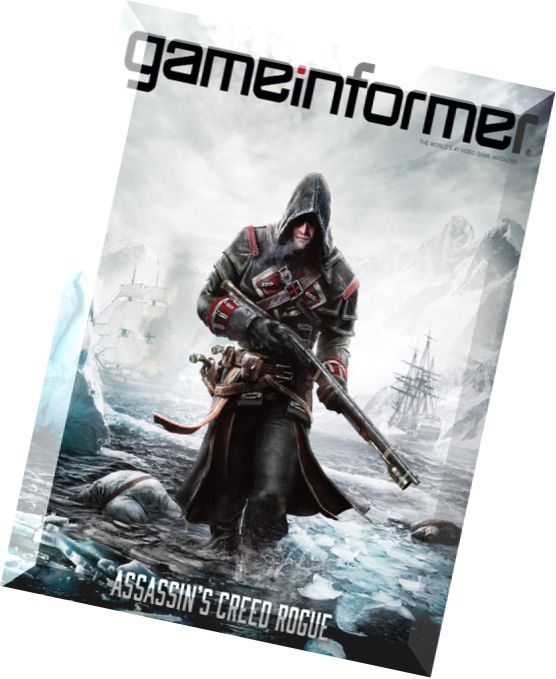
GI_cover


In September’s issue of Game Informer the “esteemed” publication seems to be initiating its own quiet assassination concurrent with the #GamerGate wars of Twitter.  While they do not seem to have leapt on the “fuck all gamers” bandwagon with most major games reporting outlets, they do seem to be digging beneath the walls that separate major gaming from indie gaming.  Turn to the two-page spread on 31 and Behold! Matt Bertz throws down his wall-less theory of gaming entitled ‘The Mutating Meaning of the Word “Indie.”‘  I call offended and uproarious bullshit.  Indie isn’t mutating, it means just what it always has: independent.  What this should be entitled is “Why we want to destroy the meaning behind the term indie.”  Strap in, this another rant of bombastic proportions.

Bertz poses the following question in the first paragraph, which will serve as the thesis for the GI article:

“When the majority of games in the contemporary landscape are already coming from outside the walls of big publishers like Electronic Arts, Ubisoft and Activision, what does becoming indie really mean?”

I am a firm believer that within each question lie the roots of its own answer.  In my opinion, the answer Matt wants you to come out with is “When the majority of games in the contemporary landscape are already coming from outside the walls of big publishers, being ‘indie’ really has no meaning.”  He then goes on to try discrediting the term indie saying that the number and style of the projects that fall into the category “indie” that the term is no longer “useful.”  That is a charming thought but being indie is more than just “breaking away from the standard studio-publisher” model.  Sure, that is a major centerpiece for the concept, but that is not the only thing it’s contingent upon.  Going rogue in the gaming industry takes serious balls, especially in the face of major publishers that are trying to muscle into the region of indie gaming.  The simple fact is that being an indie developer means putting in countless thankless hours developing a game that will likely be swallowed up by the sea of other small titles.  Sure, indie as a genre is useless, which is why people need to stop letting Steam make them think indie just means an artistic game with hand-crafted backgrounds and a bizarre concept.  Indie isn’t a genre of gaming; it is a community of indifferent rebellion.

Bertz then takes two indie developers, Cloud Imperium Games of Star Citizen fame and Lucas Pope of Papers, Please, lays them against each other and claims a multi-million dollar company, such as Cloud Imperium, and lone developers residing in the same sphere degrades the purpose of calling something indie.  Honestly, anyone that would make this claim is just fooling themselves.  I don’t wholly blame Bertz, either.  His misconception is one born of an artistic medium still striving against its own over-bearing identity to define itself properly.  Taking an example from the music industry, Eminem has his own record label and I would call it an independent record label.  At the time of its inception, Shady Records was not a giant in the industry, but it surpassed those lofty heights.  Just because he ‘got big’, doesn’t mean he ever stopped being independent.  Likewise, when developers such as Lucas Pope or Mojang become big they don’t stop being indie developers.  Sure, indie is a genre of music, and that community defines itself with easily identifiable features: retro glasses, a taste for music no one has heard of, flannel.  But Bertz is suggesting that gaming has to take on the same restrictive reasoning.  You are defined by an easily identifiable array of elements that collaboratively structure “how indie games are supposed to be.”  The point of indie development is that there is no structure.  You can create whatever crazy fucking idea you have concocted.  Like Minecraft, possibly the most successful indie game of all time.  Even those musical miscreants labeling themselves as indies listen to a respectable variety of musical types ranging from rock to chiptunes.  Trying to label them all as the same ‘genre’ is just as useful as stating indie games are all the same ‘genre’.

I reported on a fantastic game crowdfund which found itself on IndieGoGo called X-Tactics.  This is a game that will be developed by veterans of Square-Enix, Capcom and Sega, and, as far as I know, it will be an indie game.  This is because it will be a game developed under a name and publisher separate from the major development community.  Other major developers have broken away from the gilt Alcatraz of major gaming and gone rogue.  This sort of thing happens in music all the time with supergroups of famous stars that get together to form an awesome musical entourage.  They don’t feel the need to label themselves indie, although many found independent record labels, I would speculate this is due to a lack of oppressive horseshit experienced in the gaming indusrty.  They have their own struggles with record labels and within their industry, and I am not trying to diminish their battles.   But when you look at the size of the gaming industry and its unrivaled power to crush dreams, the music industry seems positively navigable.  Lorne Lanning, creator of the Oddworld series, is another of these major names, and Oddworld is a game that deserves to call itself indie.  In his interview on VG247 he goes into exhausting detail about why major developers would ever go indie, but my favorite line is:

“I’d rather not make games than go fucking be a slave for public companies who care more about their shareholders than they do about their customers.”

Yea he really says that, and more, but saying ‘established developers going indie would similarly render it useless’ is equally quaint.  The fact is that major developers are terrified of indie developers.  Scared down to their quivering, flaccid cores of achieving the same level of irrelevance populated by Leigh Alexander and Anita Sarkeesian.  But why would they be afraid?  Here’s why:
Some people estimate that Mojang made 84.2 million USD and 66.4 million Euros from Minecraft in 2012.  Sure, they are on the Minecraft forum, but they were estimating out of nerdy interest and had no real motivation other than spontaneous curiosity.   If a fraction of that is true, it still doesn’t account for the numerous other countries that play Minecraft and how much money they’ve spent on it.  When Mojang became a money machine overnight the collective bowels of major game publishers voided into unsuitably diminutive pants.  Mojang showed that a bizarre game with a solid concept and motivation can conquer the world, and they didn’t have to pass through the close-guarded gates built by major developers.  Simply put, major developers weren’t getting a share of that money.  That millions and millions of currency of your choice, and it hurt.  If not in their pockets, somewhere deep in their dark, dusty souls.

Turning back to Berts, he goes on to attack indie from numerous angles: big budgets, large staff, companies that make both major games and indie games, and honestly he continues attempting to discredit the concept of indie games.  It is a shoddy attempt to convolute the real issue behind the conversation.  See, major publishers see everyone jumping ship for this concept of “freedom.”  More and more, major developers are leaving them, and, like a jilted ex, major publishers try to bring them back.  This article points to companies like Ubisoft, which was responsible for Valiant Hearts, and says that the “easily identifiable elements” that make these games ‘indie’ are artistic, retro features of a game that make it bizarre or deviant from the norm of gaming.  Thing is, this article tries to make it sound like indies are becoming just as independent as major developers, when really major developers are just afraid of becoming as small-time as indie.  They are afraid of the change in the industry bringing about new giants and contenders and themselves losing relevance in the swarm of rising stars.  Mostly, this is just the result of gamers becoming largely disenfranchised by major publishers, who want to make the same bullshit over and over and have us swallow their crap forever.  The fact is, funding autonomous studios to make games for you is nice, but the fact is if your game is published and distributed by someone like Sony or Ubisoft, you aren’t independent, which is the source-word of indie.  You are just following the same tired model of the studio-publisher model except that they grant you a little more freedom.  Because that is what is making money nowadays, right?  Indie games are innovative and bold in ways that major publishers don’t have the balls to be, they’re creative in ways that major distributors can’t rely on and they’re unpredictable in ways that can’t be monetized by a massive company effectively.  Indie games are indie games because they succeed by their own virtue, not under the cultivation of a major publisher, which has all the power of a totalitarian propaganda machine at its disposal.

Then again, I am reading this in Game Informer, a magazine that is commonly perused by the Mountain Dew and Doritos abusing target audience of major publishers.  Not like they would ever publish an article that is biased in favor of the people who directly profit from the sale of games created by major publishers (who publish this rag mag), rather than the sale of indie games that sell through Steam or even indiedevs’ websites.  My suggestion is to refer to “indie” games that have been incubated and published by the likes of Sony, Activision et al as subbed indies:  Independent games that are subsidized by major publishers.  Granted, people will likely not care about the distinction, as long as the game is fucking fun.  I just find it annoying when they say the label is no longer “relevant” or “useful” just because major industry gaming thinks so.  Indie games should remain indie because it keeps them from being enslaved by major companies that just want to put their dick in it and soak up profits.

Have your own crotchety thoughts on this?  Join the discussion in my Steam group, Crotchety Gamers United!