Elysian Shadows, Preview of 2D Paradise

ES_logo


You backed it on Kickstarter and now it’s happening.  We were excited about the mechanics, but what about the elements we’ll all fall in love with?  Who are the characters? What are their struggles?  What is their world like?  I wanted to know, and Falco Girgis and the Elysian Shadows Team agreed to tell me.  So what’s behind the game?  Find out with the Crotchety Old Gamer!

I am excited as anyone about playing this game, but who will be our window into the world?  Who is the main character of Elysian Shadows, and what drives him?

“The main protagonist of ES is named Julien. He is the son of two famous “diggers” who were well known for their research of the ancient ruins scattered throughout the land of Elysian Shadows. Julien grew up traveling with them on numerous expeditions and learning about the different ancient cultures of the past. He was well on his way to following in their footsteps as an accomplished digger, when the two mysteriously wound up missing during an expedition. An adolescent Julien was then sent to live with a family friend, the local museum owner, where he grew up despising the ruins that claimed his parents. Rather than exploring them with a passion and thirst for understanding as he had in his youth, he now scours them for a means to survival, plundering and looting their treasures just to make ends meet. 
Julien has virtually no motivation to take part in the party’s quest in the beginning. He is thrust into the action by necessity rather than choice, and it’s initially the other party members who drag him along on the journey. For Julien, this is a quest of personal growth. It’s him having to come to terms with his traumatic past and face the ruins that caused him so much pain, and his struggle to reignite a long-lost passion that died along with his parents. Julien’s character represents crawling back up and trying again after suffering an extreme loss or emotional defeat. Whether this be a metaphor for learning to love again after heartbreak or learning to try again after seeing your dream project crushed on Kickstarter. Heh heh.”
Julien and the other diggers have to rely on physical weapons when excavating ruins because magic is a power reserved exclusively for the religious. While the technology for Julien’s time is not particularly advanced by today’s standards, many of the weapons and artifacts the player encounters within the ruins from civilizations long past are far more advanced than those found in his own time. The diggers and the scientific communities rely on these kinds of manufactured and uncovered weapons for combat while the religious are strictly magic-users. But what if Julien and his friends somehow discovered a way to use magic as well?”
Dark, mysterious caverns where treasures and danger abound...

Dark, mysterious caverns where treasures and danger abound…

Julien, like most people, is dealing with a  secret pain.  His struggle might be unique to himself, but each of us has our own climb from the bottom.  Each of us has a cave of terrible darkness and untold treasures unique to our souls that we must brave before we are free to be who we are.  Joseph Campbell wrote Hero of a Thousand Faces, which concerned itself with the way characters like these resonate in each of us.  What about the world, though?  What is the story told by the world Julien and his people will inhabit?
“Elysian Shadows is a world caught in constant conflict between magic and technology. Magic is associated with faith and the religious. Technology is associated with scholars, scientists, and explorers who have turned away from The Creator’s divine gifts in an attempt to better understand the world around them. The technologists are seen as heretics, while the religious are seen as sheep, following blindly. Julien and Eryn, who both work for a museum, are sent on an expedition to uncover a valuable artifact for a new exhibit. The two quickly find more than they bargained for in the ruins. They stumble upon a discovery that thrusts them into the middle of this mounting conflict between magic and technology, forcing them to unlock the mysteries of ancient civilizations and prevent their own people from sharing this fate.
The storyline of Elysian Shadows was heavily influenced by the moral dilemmas of our own technologically advanced society, especially with recent advances in bio-engineering. With stem cell research, cloning and the human genome sequence, science challenges religion on a fundamental philosophical level. Science is beginning to encroach upon powers that many people argue are reserved exclusively for God. Do we have any business modifying our genetic make-up? Is it moral to alter a fetus before its birth? Is it wrong to artificially produce life in a laboratory? Science claims that these advances could drastically benefit all of humanity, while religion claims that we are meddling with things that we have mo business meddling with. We wanted to create a story that was more than just a superfluous JRPG experience. We wanted something that would make the player think; something that would engage them intellectually and emotionally.”
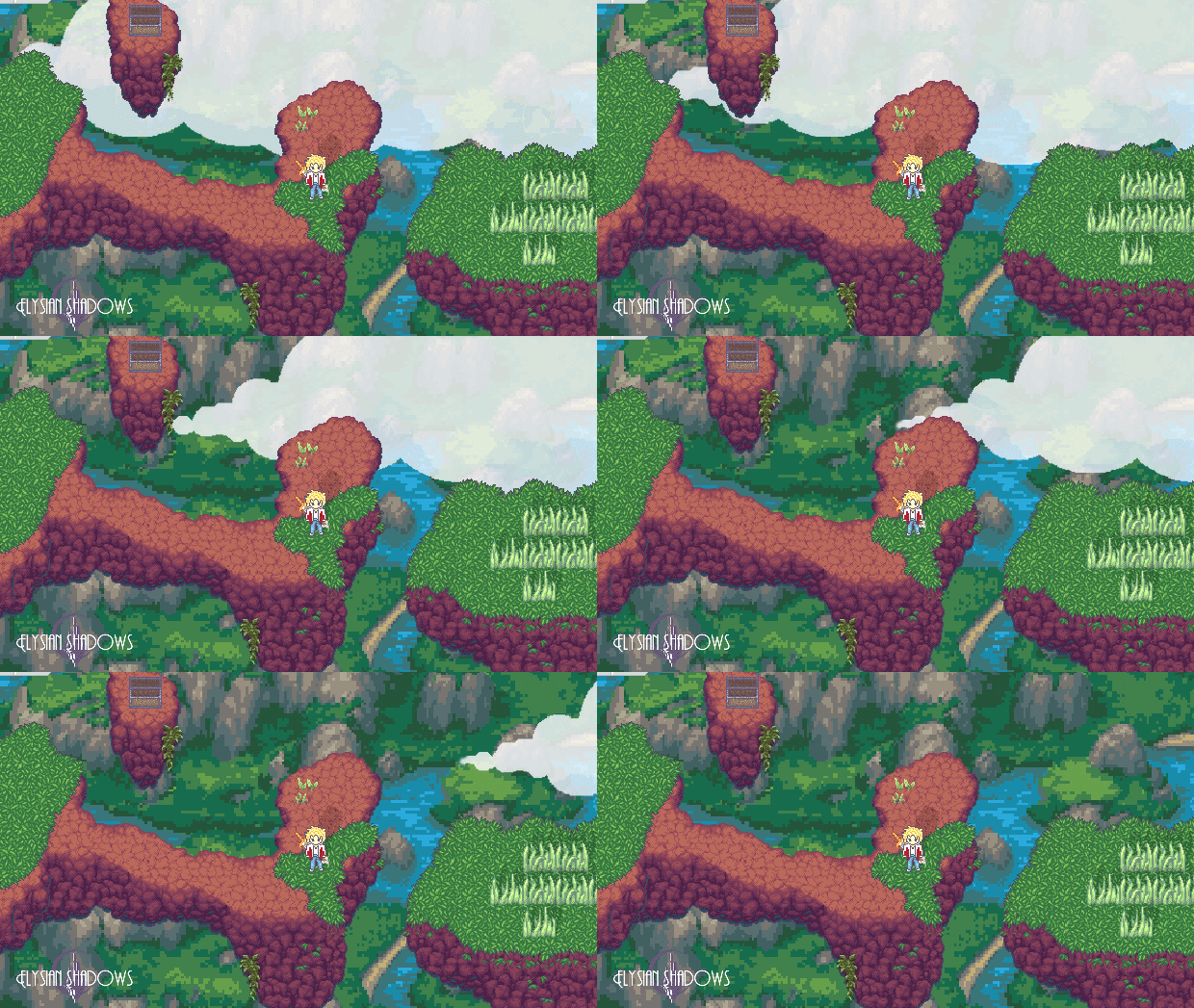
Lovely vistas!

Lovely vistas!

Elysian Shadows seems like it will strike a chord that resonates with our own lives, possibly even a few nerves, but who would we be if art never asked hard questions?  And how we answer these questions are part of what make us individual from one another.  Our varied ways of thinking and how those come together for a common goal are part of what has made America what it is today: a center for all people to share ideas freely, and sometimes those ideas reach back out to the people that created them.  So how will the characters accompanying Julien contribute to the game?
“Julien is initially accompanied by the lead female protagonist, Eryn, who is a tech-savvy university student. Eryn helps her father run the local museum, showcasing various exotic and mysterious artifacts from the surrounding ruins. While Julien’s past has rendered him jaded and disinterested in discovering the secrets of these ruins, Eryn explores them passionately in hopes of uncovering their secrets often dragging Julien along for the ride. She is a strong-willed tomboy and often the most level-headed and responsible member of the party with a ruthless pragmatism. 
The two adventurers find themselves in the company of one of Eryn’s professors after his lab is ransacked and his research is destroyed ( presumably because he was getting too close to a breakthrough with his work ). While Professor Rand is brilliant, he’s also infamous for dysfunctional antics and living a life of excess. His peers in academia generally disapprove of his hedonism, but they are often forced to concede to his genius and gift for piecing together puzzles. Rand serves as a non-traditional guide for the party, and he is well-versed in the ancient ruins and their technology. Unfortunately Eryn finds herself having to guide Rand just as much throughout their journey, keeping his arrogance in check and ensuring that his decadence doesn’t get the party deeper into trouble along the way.”
...And when you look at what they want to accomplish, it is hard not to drink the koolaide.

There is a big adventure out there for us

Allies and enemies and what separates the two is a major point of reference in how each of us live our lives.  It says something about who we are and what we want.  Note that Julien is already surrounding himself with those that spend their time largely concerned with the ruins, the very thing that he blames for the loss of his parents.  This means that, despite his feelings on them, somewhere they are still very much a part of him, maybe even one he wants to love again as it would be the only emotional link back to those happy days of youth exploring with Mom and Dad?  Eventually he will have to face those emotions, and his friends will be the ones to help.  So, what about the game itself?  How will each of these characters actually work together?  I was allured by the claims to an inventive new system for skills and jobs – How will these systems work and how will they be reflected in each character?
“It’s actually a mixture of two different systems. We ran into a kind of design dilemma early on when we were dreaming up skills and abilities for characters. On one hand, we wanted each character to have their own unique feel and play style. We didn’t want every character to feel completely interchangeable, and we wanted to give each their own innate strengths and abilities. But on the other hand, we are huge fans of job and class systems, and party customization is something we very much wanted to do with Elysian Shadows. We really wanted to give the player the freedom to customize their party as they see fit.
So we wound up with a hybrid system where each party member learns their own unique set of skills and abilities during combat and storyline progression. They each have their own unique skill trees and pools that are independent of the other characters, which is how we intend to make our characters unique and interesting. Then  each party member can be assigned to a certain class wherein they unlock class-specific skills and abilities. This allows the player to really fine-tune their party, offering a considerable amount of strategic freedom within the combat system, while still allowing us to create unique and interesting characters.”
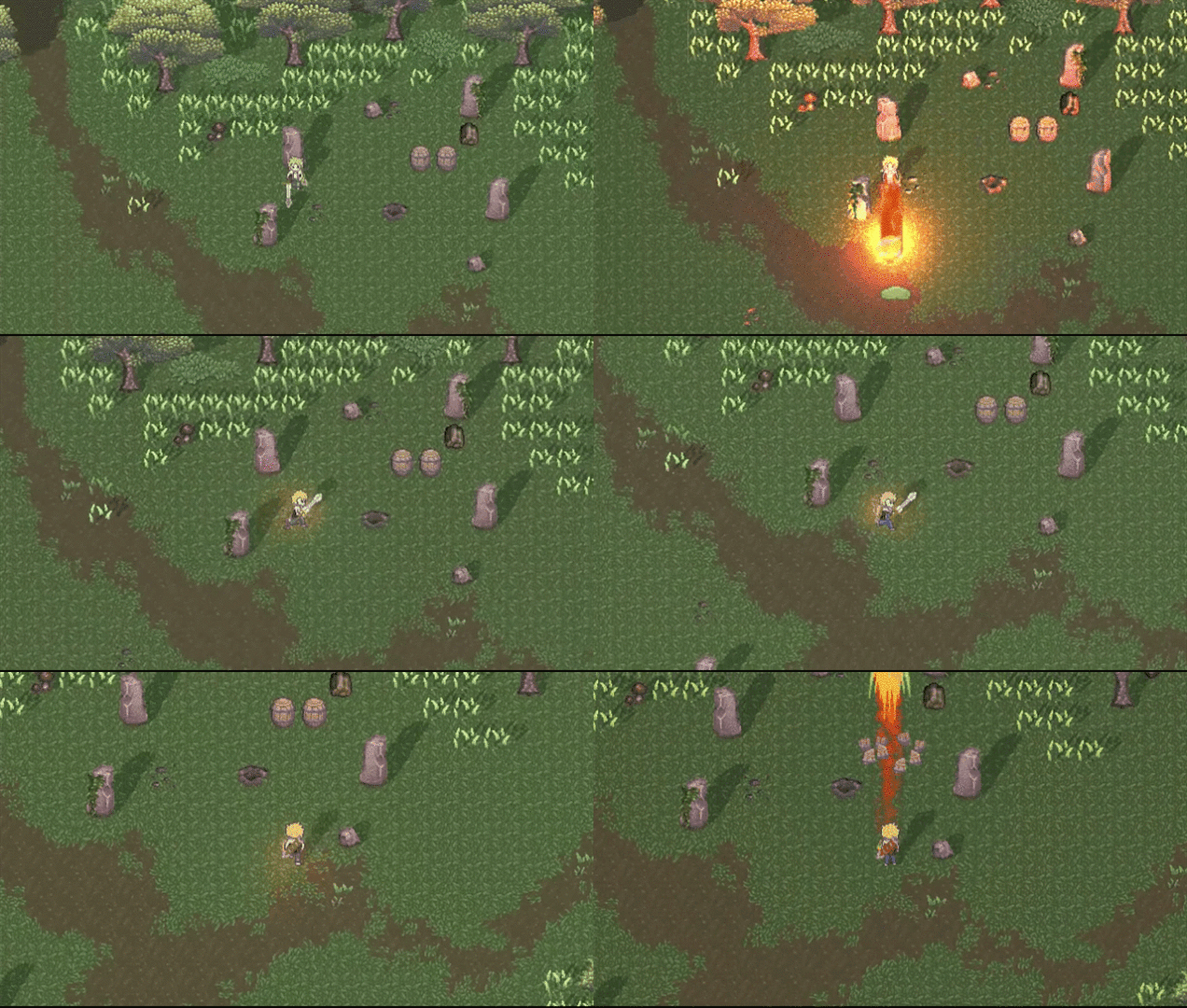
Giant swords and power help, too!

Giant swords and power help, too!

This means the class you choose for each character determines what role they will play, and allows you to dictate how the party reacts to challenges.  Alongside this, one character might have access to certain elements within there skill tree that other characters simply cannot get to – the same way Falco and myself might both become developers, but we would end up using those skills to completely different ends and learn different, though equally useful, methods of making games.  Well, damn, I am glad I contributed to the Elysian Shadows Kickstarter!  Of course, there are still 5 days left to contribute to the ES Kickstarter, but what about those that miss the opportunity?  How much will they have to pay and what outlets will the game be available on?
“Since we’re targeting so many different platforms with completely different indie markets and economies, we can’t really set a fixed price point across each. The price of ES will most likely be adjusted so it’s comparable to other indie games available on each platform. Currently, digital copies of ES for Steam and OUYA can be preordered for $15 through our Kickstarter. This also includes our development tools, ESTk and ESGamma. The standard edition of Elysian Shadows for the Dreamcast will be $49, which includes a professionally produced jewel case, color instruction manual, and pressed disc thanks to our publishers at Watermelon Corp. The game will look like a 100% legit Dreamcast release picked up from a commercial retailer back in 1999. You will also be able to choose between PAL, US, and JAP style packaging so ES will match the rest of your DC collection no matter what region you’re in!”
Painstaking attention to detail, thorough skills and class systems, complex characters and a complex storyline balancing the the beliefs of a world against the pain of one kid: Elysian Shadows is going to have something for everyone, and a little extra to boot.  I have never been this excited for another modern retro game; not Shovel Knight or any other mainstream title.  Elysian Shadows, however, is more than just a modern retro 2D RPG: it is our modern 2D RPG.  More than just this game, I look forward to the ripple effect that this game will create and how that will resonate across the industry.  Here’s to hoping it contributes to some interesting developments all the way around.  But whether or not it does, either way, it’s going to be an awesome game!  As always, you can check the Elysian Shadows website for more about the game!
Why is Bojan Brbora Merging Film and Gaming?

capsule_main


At the end of July I reviewed 4PM, a game that you might say takes games a little too far.  Receiving mixed reviews, this game boldly stares down such topics as alcoholism, adultery, drunk driving and suicide.  While I can say that  topics with this gravity don’t typically feature in games, it is a trend that is on the rise.  Today Bojan Brbora, the serbian cinematographer behind 4PM, discusses his motivations with me and sheds a little light on what is driving this dramatic explosion of artistic games.

For those not entirely familiar with Bojan and his work, he gave a little personal background:

Cinematography used to be my full time job up until two and a half years ago, when I came to the UK from Serbia and earned an MA in Game Design at the National Film & Television School.  This is where I made 4PM, as well. I worked full time in the Film industry back home for about 8 years before deciding to take a break and learn this new medium.  Currently I try to split my work 50/50 between Film/TV and Game Design, and I am quite keen on continuing to work in both areas.  The projects that I mainly seem to work on are drama related, which is probably why 4PM is in the same category.

So Bojan has years in the Serbian film industry, but what would make someone take the step into gaming directly from film?

Around three years ago during slow periods, I was playing things like Mass Effect and Deus Ex and realised how much I had grown attached to the characters, especially after making choices and changing their path in the story.  I really felt like I was participating in the narrative, and being responsible for what happened on the screen; something which you rarely get in other media.  I thought this was really interesting.  What if one applied the same thing, but created a more contemporary and contextually relevant narrative?  Since this isn’t commonly done, I decided to give it a go and signed up for the course here in the UK.

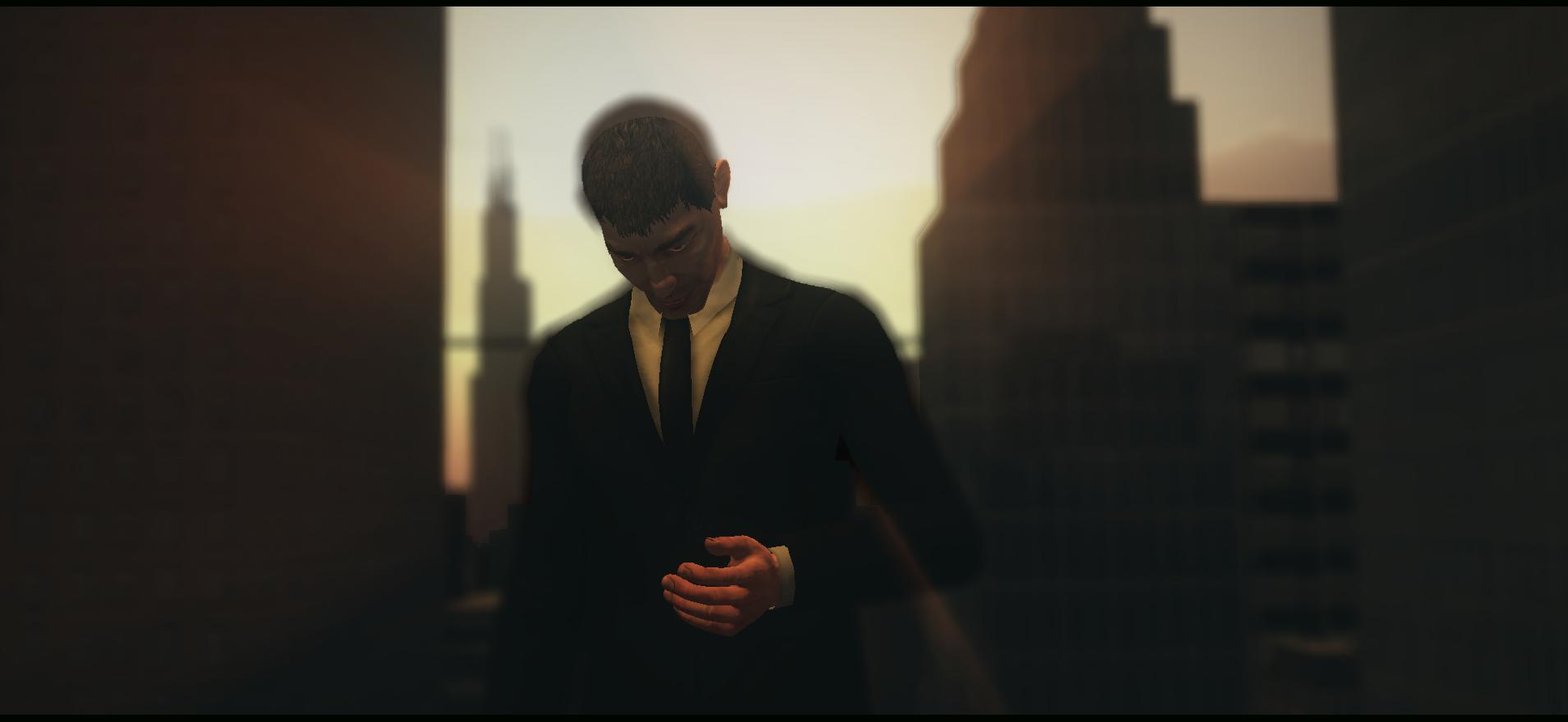
(beware of spoilers) In 4PM you play as a reckless alcoholic named Caroline, who is grieving over the loss of her father.  Granted, she is personally responsible for his death due to her inebriation at the time of the car crash.  After another rough day at her soul-sucking deskjob, Caroline decides to sneak down to the bar for a drink.  On her way, she runs into a man who throws her a listless glance and continues past her to the roof.  You then get to decide to follow or go to the bar.  Following him you can learn the truth about yourself and save him.  Going to the bar gives you a front row seat to his suicide, as he lands on a taxi parked in front of the bar.  Atop the roof Caroline learns that recently she has been having an affair with a married man – the jumper on the roof – whose wife is leaving him.  Despite Caroline failing to remember any of this, she does have moments of recollection where the past comes trickling in to haunt her.  On that rooftop she faces down herself, the truth of what she has become and where she wants her future to lead.

Given the gravity involved, I wondered at the inspiration behind the narrative Bojan concocted to accomplish the task he set out for himself.  His answer sounded like the beginning of numerous indie films.

4PM started out as a situation, a meeting of two strangers on a rooftop at sunset with some sort of mystery element bringing them together.  Extra tension was provided by having one character on the ledge, ready to jump.  It was a very simple setup, from which I wanted to expand and see who these characters are, and why they are really there.

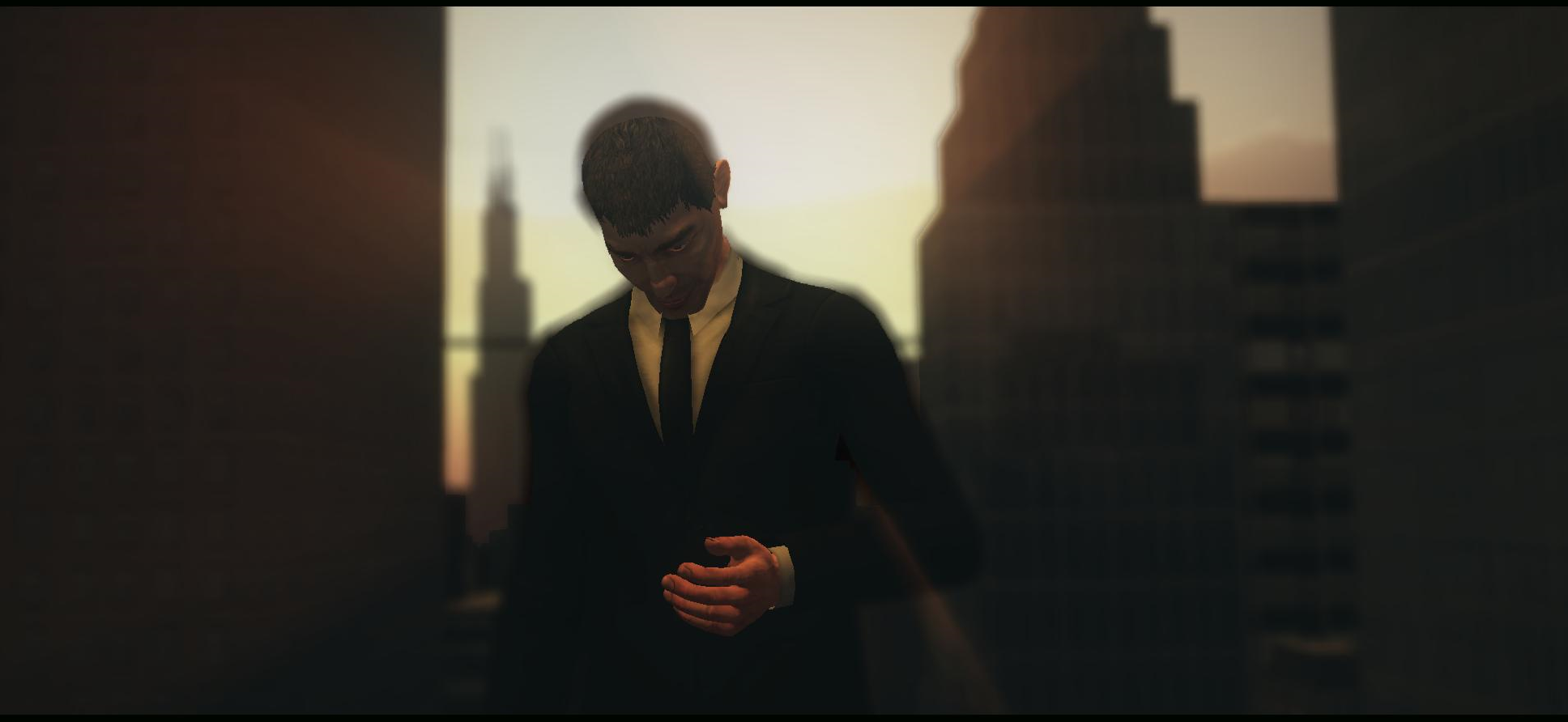
A very humanizing situation

A very humanizing situation

So why create a game that is more a dramatic narrative than an actual game?

I think the reason why I made more of an interactive story than a game is because I really wanted to expand what the medium can do and try to attract people who are not gamers; hence the removal of most classic game elements and introduction of film language, which is more recognizable and an easier transition for most people.

Bringing non-gamers into a game like this is a challenging task.  Interactive media are the only ones in which you take part in a story, driving its significance deeper into the player.  Each action taken in-game is part of a developing story, which makes the internalizing of story elements that much easier via Suspension of Disbelief.  Such internalization is made even easier by games since the player doesn’t just see it happening to people on the screen, they experience it happening through their decisions as they play out via the avatar of their own conscience: the primary character of the story.  Of course, if the end result doesn’t accurately detail what the player might be working toward, the story could be rejected outright.  So, what this cinematographer proposes is an immeasurably more difficult task than what film sets out to do: film shows you a story and ask you to think, such games challenge you to live a story and see where your decisions lead it.  This process is profoundly more difficult since the interaction between game and player is exceedingly more intimate than that between film and viewer, and the interaction itself largely occurs in the mind of the player.

So this becomes a natural obstacle for the creation of such narrative games, making the player navigate events and emotions that they might altogether avoid themselves.  But as movies challenge viewers to place themselves into a character and understand the context of their lives, so, too, does 4PM.  You wake up in bed as Caroline, and her life and decisions become post-it notes and empty bottles on the floor.  Her life becomes yours for a short time and learning who she is becomes a large part of the curiosity of 4PM.  Then, by making decisions that control Caroline, you adopt her as the chosen form to explore the story.  And it is a tragic story.  So why make a game that is this tragic?  Is there a greater message here?

Through developing the details of the story with my writer, Stefan Kaday, something kept pulling us down this very dark path and outside of just typical thriller material.  We stumbled onto some very real and difficult themes, but in my view, this could only be a good thing as it felt like something novel; a place where few games want to go.  It is a difficult thing to research, as nobody really likes talking about things like alcoholism, guilt, suicide and compulsion, so most of the conversations with people that had gone through them had to be indirect and were quite often emotionally draining.  I don’t believe 4PM has a direct message, it is more an exploration of how complex human relationships are and that a lot of us suffer every day, but we rarely face or talk about this due to some ridiculous social stigma.

Pick your poison

Pick your poison

So the nature of the game itself is its topic: exploration of these themes rather than a judgment on them.  The player decides the path that Caroline takes, and decides what they see.  Therefore, it is ultimately the player that dictates the message conveyed by the narrative.  For this reason, 4PM was victorious in its task.

Games like this are not uncommon, though, and have recently been cropping up everywhere: Depression Quest, Papers, Please and Brothers: A Tale of Two Sons.  Bojan was happy to provide his thoughts on the rise of the dramatic narrative in games.

It is a sign of the medium finally growing up and having a big niche in serious, adult themes.  This is a good sign, and I hope developers continue to do more projects relating to real world issues, though there is still quite a bit of work to do in making these experiences more subtle and entertaining to a wider audience.  This is only a matter of time though, and I am sure the next few years will bring some ground-breaking work.

And that is solid logic.  People seem to be buying these games, so it would follow that more of these games are forthcoming.  Can we expect more of these games from Bojan Brbora?

I am currently doing some work for other people to survive in the UK.  I also needed to take a break from being in charge of absolutely everything on a project, as it left me psychologically drained. I am developing a few ideas and prototypes, though, and VR seems to be quite an interesting new platform, one currently worth exploring.  I’m also working on some film ideas.

Games, of course, take a team of developers given the enormity of their content.  Who were the people on 4PM’s team?

While this was essentially a one-man student project, I did work with a few people from the film courses to make the project really unique.  Stefan, whom I already mentioned, fleshed out the story and plot, wrote the dialogue and served as an excellent fresh pair of eyes and counterweight to my crazy ideas.  Neo Peterson was instrumental in filling out the world with sound and audio atmosphere.  Terence Dunn was the main music composer, and did an amazing job putting together the orchestral and some electronic pieces.  I am also very thankful to the guys from “Kazoo”and “et_” for letting me use their music as it plays a huge part in making 4PM what it is.  These are all extremely talented and kind people, and I look forward to working with them again in the very near future.

What was you favorite part of developing this game?

My favorite part of creating this game was working with other creative people, bouncing ideas off them and learning these complex, new tools to make the project happen.  It also brought me to a new country, where I met so many new, talented people and expanded my horizons.

Games like this really have the potential to make games something more, and help us explore our world in ways we never expected.  Although some dissenters fail to visualize the potential of such experiences, games are moving into the realm of true art, a modern art that is just as powerful and relevant as any film today.  Bojan had some final thoughts to leave readers with regarding this.

I would like to urge people to support projects like these, both socially and financially, as it is the only way to move the industry forward and avoid stagnation.  They are currently experimental, and rough around the edges, but the end goal is something spectacular, so we really need your support.

Hopefully we can develop these games into something spectacular. 4PM is available now on Steam for 4.99$. Thank you for reading.


Please note that material has been lightly edited for flow and coherence.

Zeno Clash 2: Much More ‘What’, Equal Parts ‘The Fuck’

ZC2_logo


Zeno Clash 2 is a perfect example of what happens when an imaginative group of talented developers find a publisher and can make a game the way the always wanted.  Granted, it is fucking bizarre as pink dancing hamsters in tutus tearing apart two cows having a threesome with a Scottish midget, but there is just as much fun and blood involved as the above description.  This game is fun.  It is a ton of fucking fun heaped into a bizarre surrealist world and topped off with guns.  Not to mention, the storyline is interesting as fuck.

So Ghat makes his comeback in this sequel by doing the opposite of what he did in the first one.  Literally, the fucking opposite.  Where before he was trying to kill father-mother and break up the family in order to avenge FM’s baby-thieving, now he is trying to save FM from a much-deserved ass-kicking and reuniting the family.  I honestly think this guy just likes to fucking beat shit up and kill motherfuckers.  I mean, that is what he did as a Corwid, and he hasn’t changed anything but the fact that now he no longer wears a mask.  I would hypothesize that this shows that Ghat is willing to face who he is and give into his dark, true self, but that would almost be too fucking involved.  I think he just likes to fuck shit up.

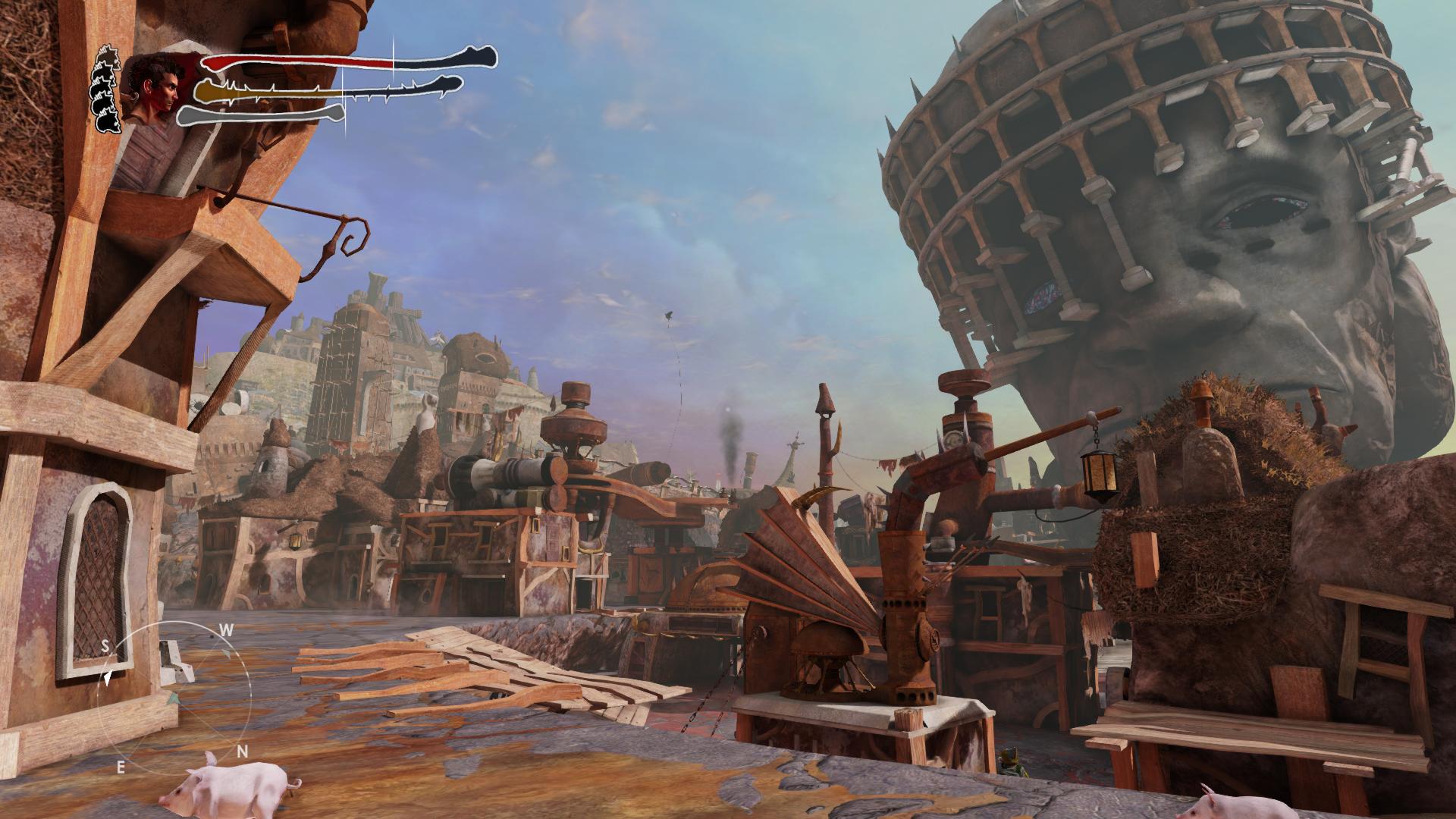
City of Halstedom, pronounced Hal-stom.  See also churning homestead of wanton fucking insanity.

City of Halstedom, pronounced Hal-stom. See also churning homestead of wanton fucking insanity.

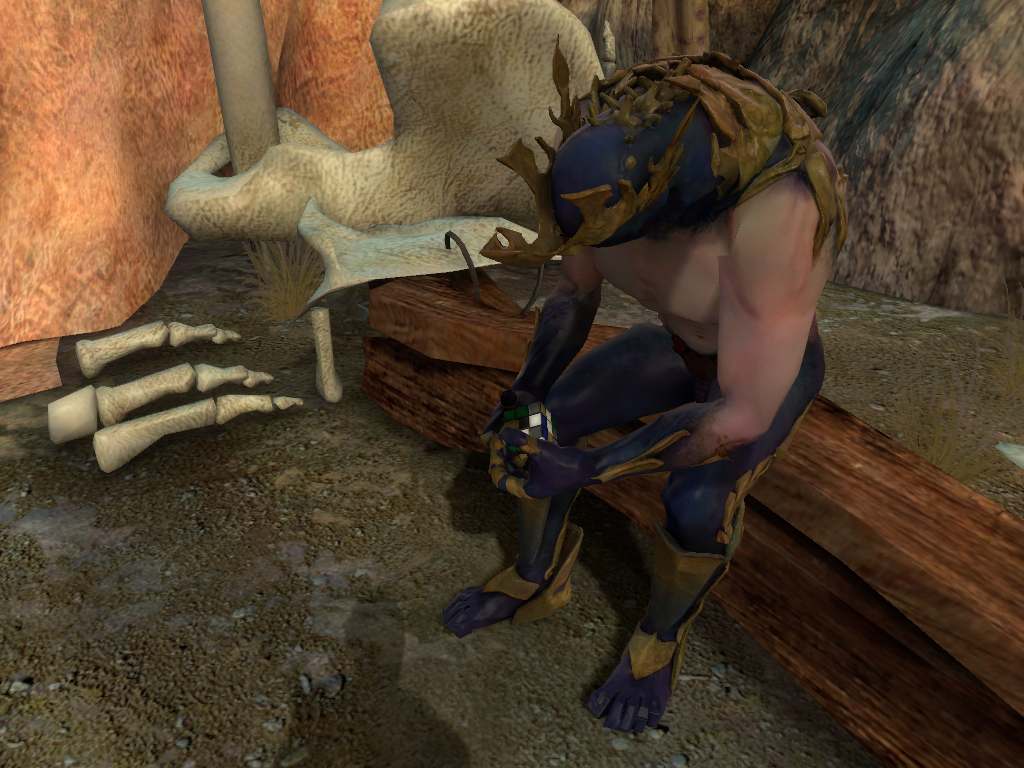
Halstedom has been taken over by the North Golem, Kax-Teh.  You know, the guy you brought to Halstedom to deal with Father-Mother?  The North Golem, the guy with the Rubick’s cube from ZC, has built a jail, the colonnade-adorned head building, to incarcerate criminals in the town.  Makes sense, guy’s a natural fucking philanthropist.  Except one thing.  These people have no idea what this concept of “law” is.  It is literal anarchy.  Whoever wants to rule can, if they can get enough support from other thugs and people in the area.  So he is literally forcing these foreign concepts of law and order onto a city of people that have trouble with the concepts associated with a can-opener.  They are children, and he is ruling them with an iron fist from his head-palace using concepts none of them can understand.  Very little about any of this makes much sense.

With FM behind bars, you would assume that everything should be alright in the world, but Ghat is a more motiveless malignancy than Iago, so he gets tired of starting bar-fights all the time.  Luckily, Rimat, a woman wearing a rice paddy hat from FM’s family, decides to start some shit.  See, after everyone found out about FM’s treachery and baby-stealing, the North Golem told them who their real parents are and where they could be found.  Many went to him, but a few did not.  Rimat was one of those who didn’t.  Her opinion was that you cannot change the past, so she cannot change the fact that she was raised by a giant, hooded man-bird.  And, honestly, she has a compelling point.  This is something that many adoptees have to come to terms with, but Rimat, given the chance to go back to them, prefers to stay with the familiar.  She chooses to stay with those that she grew up with.  Very interesting.  So together with Rimat, Ghat helps to break FM out of jail and seek out the various members of the family.

After they’ve found all their brothers and sisters, they then turn their goals against the golems.  As it turns out, the golems are just the servants of some infinitely wiser entities, and they were put in place to keep the Zenos from leaving their land of Zenozoic.  The term “zenos” is used to describe anyone from this place, too.  I would want to keep these guys out of my backyard too.  I mean fucking look at them!

Ugly is a polite term for these people

Ugly is a polite term for these people. I mean, the police force wear flour sacks on their heads leaving you to imagine the horrors beneath!

Above is one of my favorite features of this game.  Normally, the gameplay is something like a free-roaming RPG, but there will be these areas where you’ll be pitted against a ton of enemies.  Unlike other games such as Half-Life 2 or any FPS by Flying Wild Hog, these arenas are not resolved with a sword or by gutting people with a machine-gun.  These battles are most often resolved with combo attacks and flying double-fist strikes.  Massive battles like this are resolved like street thugs would back in the 1920’s:  Everyone has a nasty brawl and the victors are the ones who are right.  Sometimes you will have some assholes sitting back, picking people off with a rifle or a grenade launcher, but hit them hard enough and they will drop it.  Of course, if there are weapons like rifles and grenade launchers, why even get into pitch brawls like that?  Simple, the guns in this game are few and far between and there isn’t oodles of ammo laying around.  It’s actually somewhat realistic in this way.  Of course, why not grab a club?  Those are around too!  This game forces you to deal with someone via fisticuffs.  Weapons that you have to strike someone with, including guns without ammo, will break and shatter.  The most reliable way to deal with your issues is to beat them to a bloody pulp with your bare hands, as God intended.

The landscapes in this game are absolutely magnificent and always always always have elements that make you curious, intrigued and outright confused.  As you wander these landscapes, you might be wondering if you are on Mars.  Actually, the game gives you ample reason to believe that it might be Earth, but the game has numerous regions.  Each region can be explored and explored freely.  Some are more open than others, but each area has its own unique look and feel, and each area has its secrets and stashes.

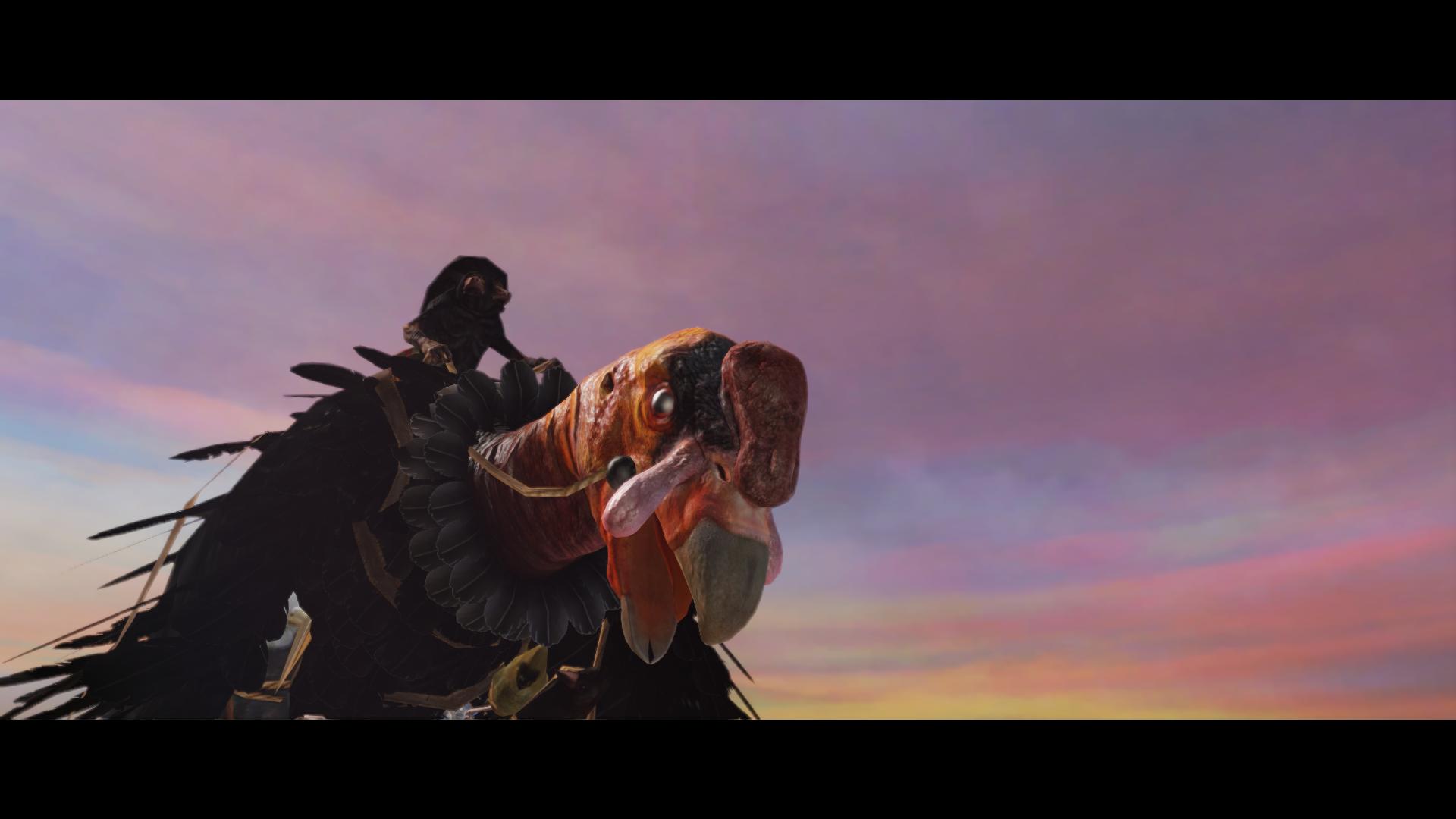
The two-headed monkey riding on the back of a fire-spitting vulture made the muculosaurus in the desert seem low-key.

The two-headed monkey riding on the back of a fire-spitting vulture region made the muculosaurus in the desert seem low-key.

Two features adding to this are stashes and skill points.  Stashes are places where you can find items (food to heal, totems to fill the special attacks meter, weapons etc) which fulfill a variety of uses, mostly combat-oriented.  These stashes look like giant, horned clamshells and function much the same way as chests.  The art director for this game should be drug-tested hourly.

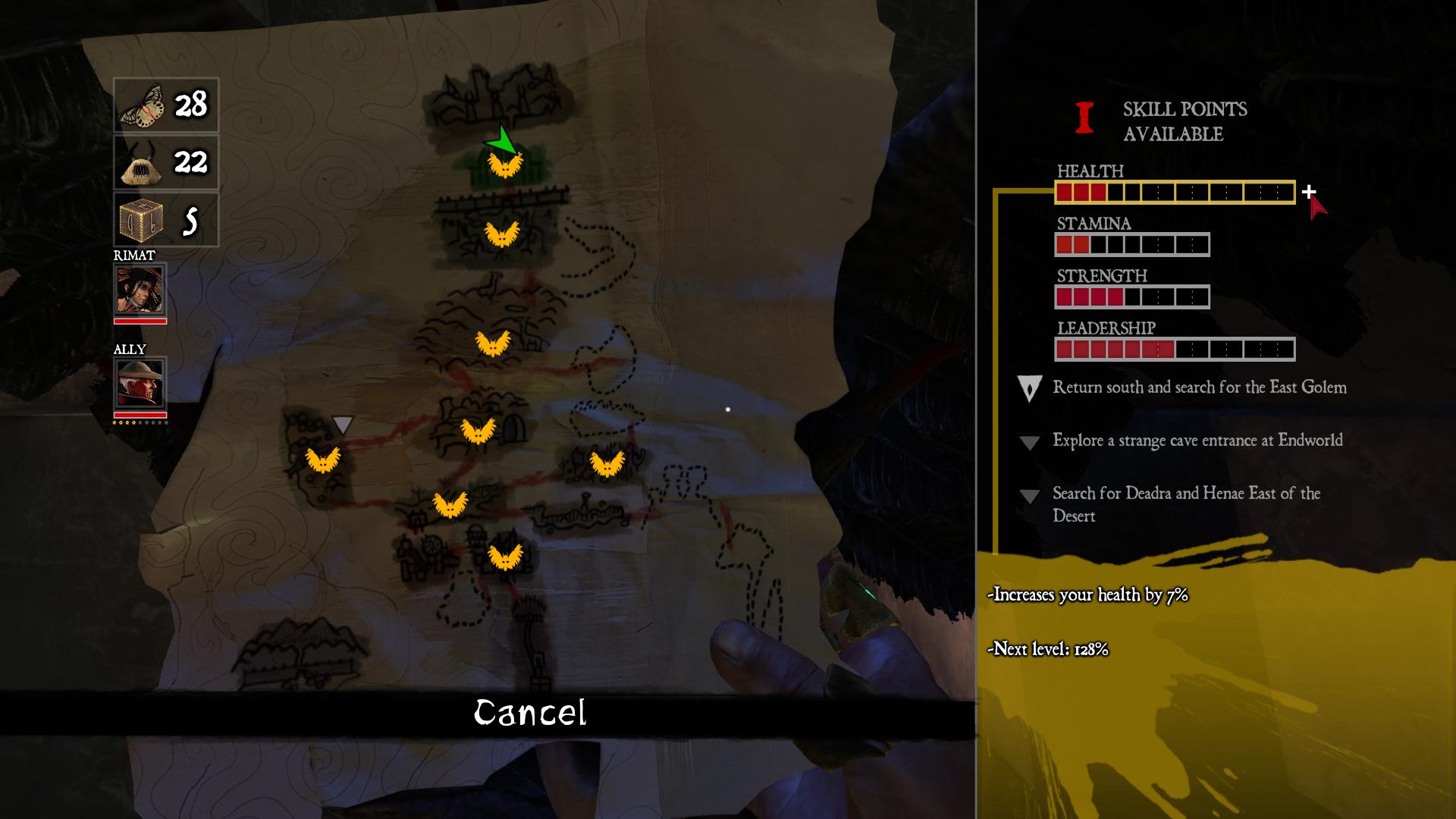
The other feature are the skill point totems.  These appear as skulls hanging from a crude stand and can be found nearly everywhere.  A couple time I revisited regions only to find a new skill totem that wasn’t accessible without equipment I found elsewhere.  These totems are well-hidden too, almost as if they hired someone from Flying Wild Hog to put in the secrets.  When you interact with these totems, half the present skulls disappear and you get points equal to the number of skulls obtained.  Once you have the points, you can go ahead and start pouring them into the various skills: health, stamina, strength, leadership. Health is health, stamina dictates how many punches you can throw before getting weak, strength is how hard you hit.  Leadership is the most interesting skill, though.  Throughout the game, you will switch out between various characters that will help Ghat and Rimat on their journey.  The higher your leadership, the more powerful the allies that you can recruit to your quest with you.  These guys are useful, too, especially when you find yourself suddenly confronted with a massive mosaic of faces as seen above.  You will be fighting ALL those fuckers, often in close-quarters.  With little space to run and twenty mother-fuckers trying to kick your ass, you will need some friends to mix up the melee.  I poured nearly all of my points into leadership.

The skills are accessible from the map screen, where you can also find some collections.  There are a variety of things to collect, all of which are random and make little sense.  They are a ton of fun, and when you play, you’ll likely see how they add their own pieces of flavor to this game.

Make a left at the canyon filled with testicle-chinned shrimp, pass by the butthole-licking tribe of barbarians and we'll arrive at the city of mechanical, two-headed monkey people.  Remember to pack sandwiches!

Turn left at the canyon of testicle-chinned shrimp, pass foot-collecting barbarian tribe and arrive at the city of mechanical, two-headed monkey people. Remember to pack sandwiches!

Do not play this game thinking you will not be saying “What the fuck” every five seconds.  This game is just as whacky, if not moreso, than the first, but its gameplay is memorable and awesome.  I honestly hope they take this formula and apply to a remake of Double-Dragon or Final Fight.  Can you imagine what it would be like to have a fighting-style free-roaming first-person RPG like this one in a vast post-apocalyptic, future cityscape where gangs tear eachother apart?  You could have some guns in there, but they might be so rare that they are almost a form of currency, so battles are largely solved with blades and fists.  Just food for thought to give Ace Team.  This game itself is a hell of a thing though.  It feels like the greater narrative of morality and law being waged by the golems is the true story, and the rest of the world is made to be ridiculous so a seeking mind is almost forced to latch onto the golems and interpret their story.  Then Ghat comes in and fucks shit up, believing, I guess, that true freedom requires the death of law.  Whatever you glean from this game, it is likely to be memorable.  And the best part is that its Special Edition currently on sale for 2.99$ on Steam, although it is deserving of every cent of the 24.99$ usual asking price.  Go get it now! Seriously!  It’s fucking awesome!
X-Tactics, Genre Fusion By AAA Veteran Devs


XT_130


Generally, I like to promote games from indies in need, but this is a story too deeply bizarre and intriguing to pass up.  Veterans of the AAA gaming industry have broken off and teamed up to create X-tactics (pronounced Cross Tactics), a game that will link gaming across mobile and PC platforms for an exciting blend.  Honestly, the anime art might not be my usual bag, but the concept behind this game is so vast and exciting that only the Japanese are crazy enough to do it right.  Ingress better watch out, shit’s about to get real.

First things first, who the fuck are these people?  Our developer in question, GAMKIN, is the product of minds from Square-Enix, Sega and Capcom.  Those names drop harder than Skrillex does his bass, but still it stands.  This is a game that will be rendered by veterans from three legendary household names in gaming.  Fuck.  These guys got together in late 2013 and they have spent most of their time in Japan away from the warm lights of our hemisphere.  Mostly they’ve been working with interactive children’s television and collaborating with local game schools to cultivate next-gen game devs.  So these guys are legit philanthropists with a serious mind for our future.  Now they turn their thoughts again toward gaming, and this beast, which they’ve gotten fully funded with 33 days left on their Indie GoGo clock, threatens some formidable levels of awesome.  For a little perspective, the campaign launched on the 8th.  This means they achieved their primary goal in just 6 days.

GAMKIN has a lot on their plate when you look at their plans.  The platforms they will be releasing on include iOS, Android, Kindle (2014), PC, Mac, Linux and Google Glass  (2015), and none of those are stretch goals.  The features of the game are complex and paint an exciting picture of gaming interaction.  First off, this is another genre-fusing game.  Its main components are tactics, fighting and urban exploration, with a 50%, 25% and 25% split, respectively.  In their own words:

When we set out to make X-Tactics we didn’t want to make just another tactical game, nor attempt to create some sort of perfect tactical game. Instead our goal as developers here is to create something new. We combined equal parts of tactical gameplay of classics like that of Final Fantasy Tactics and Valkyrie Chronicles, together with fighting game mechanics and aesthetics, like those found in the Street Fighter series, to create a new gameplay experience, that we at least have not seen done before.

– GAMKIN on Xtactics, Indie Go Go campaign


Now this doesn’t explain the other 25% of the game, but let’s stop a minute what this means for PC gamers, as PC and MAC will be options for the game.  The game itself will use turn-based tactics to create a high-speed gameplay environment that focuses on treacherous close-quarters combat, as you might find in an urban setting.  Your heroes won’t be able to take ridiculous amounts of damage to the face, so you will need to make quick moves and calculated risks to achieve victory rapidly.  Failing to do so finds you at the business end of some purple alien’s psychic attacks…


... and that suit screams "business time"

… and that suit screams “business time”

Each battles takes up the full screen, and each mission will be comprised of several battles.  With one screen active fights will be tightly fought, so bonuses like flanking, support, destructible furnishings in the environment and traps will give you a serious edge and change the battle’s dynamics every time you play.  X-Tactics will also utilize an initiative system, which they compare to that of Final Fantasy Tactics, but I will translate that to the American readers: shit’s going to battle like DnD.  Initiative will be based on speed and turn order will be thereby determined.  This will also open up the ability for seasoned players to fine-tune their initiative-order to get their team members to unleash dual combos and team combos.  Not to mention, enemies will come in waves each battle, so you really have to get that ass in gear and wipe out your foes before more arrive!
What does this all mean for mobile users?  Honestly, this part looks to be the most exciting.  GAMKIN is going to use GPS information to create a variety of missions that will allow you to defend your neighborhood, school or workplace from outbreaks and other dangers.  Each character you have will even have locale-based storylines that will be unlocked depending on where you are, so the exploration is highly encouraged.  Where this game will really shine is how it will use the GPS of your device to investigate your surroundings, reveal hints and uncover treasures.  This will open up to more modular features where users can organize their own location-based events and treasure-hunts with friends.  In addition to all this, the game will be sensitive to the time of day, moon cycles and even weather to unlock events, initiate outbreaks and influence character abilities.  Having the mobile functionality will also allow for 4-player co-op missions, so you don’t have to be anti-social with this title.  And for those of you guys who shelled out the outrageous amounts of cash to join in on the googe Glass explorer program, the team will also have a companion app that will assist with the urban exploration part of the game.  If that isn’t enough, they will also be updating weekly with episodic content for the game, including missions, items and new heroes all at no cost to players.  If they throw in anything else, my brain might explode.

O, no, wait.  That's just my aunt's baking.

O, no, wait. It’s just my neighbors’ cooking.

This is all well and good, but what is the fucking story here?  Well, it takes place in a story like our own, if our world was controlled by top-secret government agencies and secret societies.  It isn’t, right?  You’ll control a motley crew of secret agents, treasure hunters and adventurers that are working to keep the truth in check.  This means you are more “Men In Black”, less “defenders of the people”.  I expect we’ll likely be killing those free-minded liberators of information, and that makes me laugh with dark, dark relish (enjoyment, not condiment).  And the game is perfectly ok with this.  In fact, the creators have said that it will use dark humor and anime punk art styles to put a new spin on conspiracy theories and urban legends!

And this got funded seemingly over night.  I have known about this game for four days, and it has already gotten its Indie GoGo funding, and they are into stretch goals.  Literally, they got a money enema.  They have 6 hunters with 2 more listed for stretch goals, including some badass ninja panda and a thick list of additional concepts.  Go and check it out for yourself, and wait with bated breath for the release!  Congratulations to these guys for getting their funding goals!  Now get in there and see if we can help them meet a few more stretch goals!

A bit of gameplay for ya ; )

A bit of gameplay for ya ; )


Shadow Warrior, Better the Second Time

SW_Logo


As with movies, games that were remade from an older title fall into two categories: epic or fail.  Shadow Warrior takes the material from the unrepentantly indecent original and sculpts it into an experience that adds to and surpasses the original.  And the way they did it is what makes this so awesome; Shadow Warrior uses the same corny sense of humor, but tempers it with a snarky, demonic sidekick. Devolver Digital has recreating an old washed-up title down to a process as simple as “give it to Flying Wild Hog.”

When SW kicks off, you main character is driving down the street listening to The Touch by Stan Bush.  People seem to like those songs from the 80’s, but not everything out of that era is worthy of remembrance.  Shit, not much out of the 80’s and even some of the 90’s is worth remembering, so this guy listening to some shitty 80’s music in a badass car on the way to a deal is a little off-putting.  Honestly, at first I was like, “God, please don’t tell me that’s the main character.”  But this game is filled with demons, so despite my pleas of “don’t make me play this guy”, I was forced to play as Lo Wang. I let out a nervous giggle and soldiered on.  Of course, this was the only thing that I, as a gamer, found distasteful about the game.  Its humor, on the other hand, is another story entirely.  If I were asian, I might be pretty deeply insulted by most parts of this game, but the way the game also makes fun of the original seems an attempt to apologize for it.

SW_powah

Huh, they misspelled “POWAAH!”


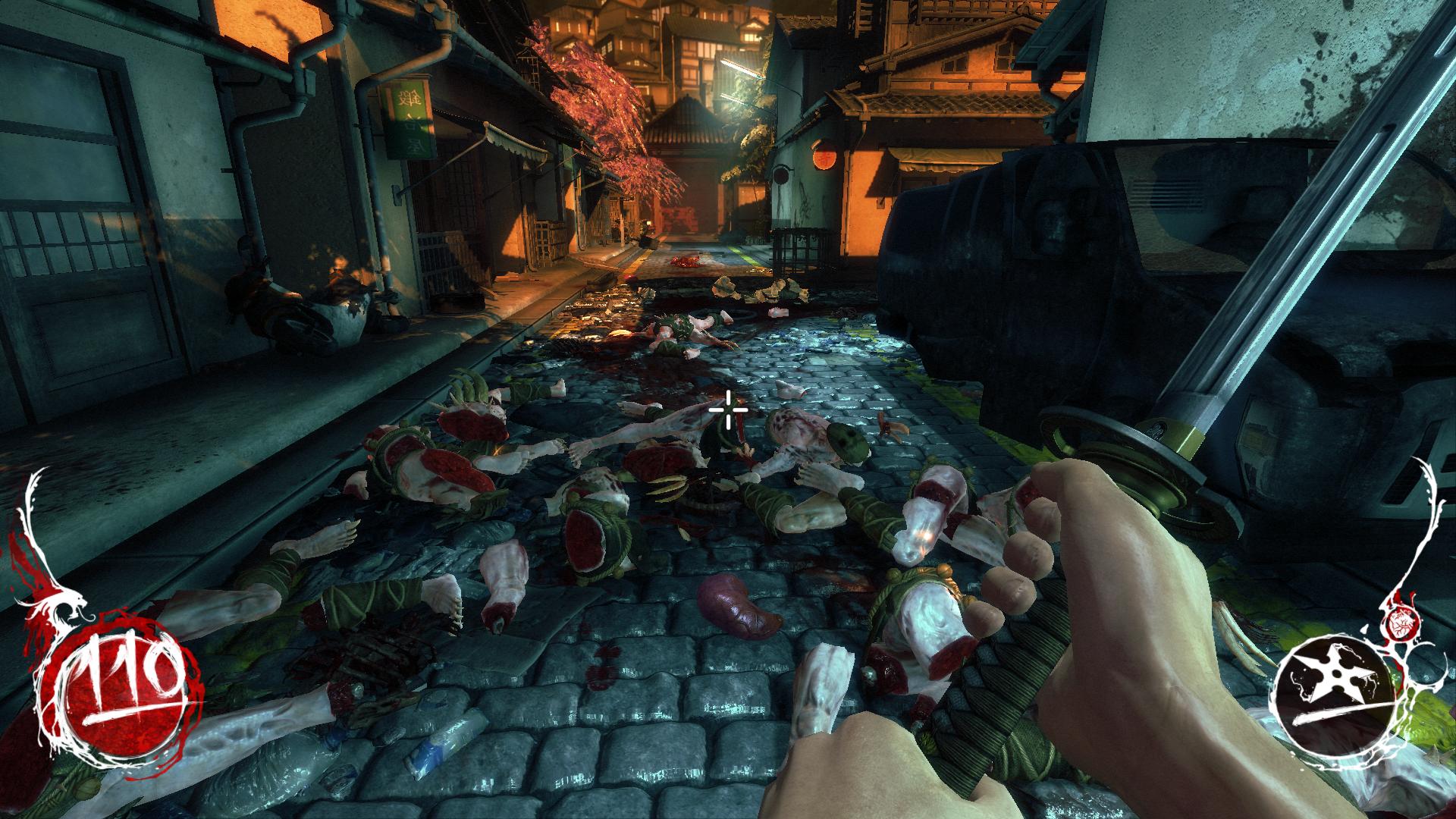
As with most games, the first level gives you an idea of what to expect, and it is fucking awesome.  It’s about an hour worth of slicing enemies to tiny pieces with a katana as they shriek and gush blood all over the carpet.  Your katana behaves like a magical limb-detaching wand, and at first I was really surprised by how horrible and gory the game is.  That lasted about 10 seconds before I was laughing my ass off at how ridiculous it really was.  2 parts Tarantino, 2 parts Jet Li and all Wang, baby.  It also displays how good at hiding shit in plain sight FWH really is.  At one point there is a statue behind glass in one of the main corridors, and I walked past it wondering why it was the only glowing statue in the whole place.  This statue is one of several types of collectibles that the game hides from you: money statues, bowls of blood, Ki Crystals and fortune cookies.

The statues give you money, but are not the only source of funds.  The other source is an ancient chinese method called “finding that shit lying around.”  As you collect money, the game totals it and lets you use it to buy ammo and upgrades for your weapons.  There are 3 different upgrades per weapon with 6 upgradable weapons: a pistol, machinegun, shotgun, crossbow, flamethrower, rpg.  One of the things I love about this game is a logical conundrum that I call the “Dimensional Sphincter Improbability”.  Essentially, unless you have a magical asshole that also links to an alternate dimension where you store all your weapons, it’s highly fucking improbable that you can carry an arsenal this vast.  Hard Reset, FWH’s inaugural title, solved this issue by making these weapons varying configurations of the same two weapons.  Shadow Warrior just stores these weapons in an off-screen pocket dimension that follows Lo Wang around at all times.  Of course, this game makes no apologies, and why should it?  It is a remake of an old, less-than-classic game.  Fuck logic.  Your first weapon, though, is the best.  The katana is an awesome part of this game, and you start the game dicing people up and flinging shuriken.  There is one problem with all of this.  The money has the square hole, which is distinctly Chinese, but the katana and shuriken were weapons of Japanese origin.  This game is a bizarre cultural amalgamation of two cultures.  Maybe the enemies in the next game will come from Korean lore?

The next big K-pop group, "Puppets of a Delusional Overlord"

Massacring these blood puppets was more fun than my ethics should have been able to tolerate.

Next, you have the bowls of blood.  This part makes me a little uneasy, and I filed it under “shit I won’t think about too much.”  Every once in a while, you will come across a secretly ensconced bowl of blood suspended by demonic power on a spiked shrine built of the corpses of your enemies victims.  So, naturally the first thing you do is drink it.  At least, I assume you do, and I am pretty sure it is never outwardly stated exactly what Wang does with it, but what else is there to do with it?  Rub it all over your body?  Either way, you get these bowls and they grant you Karma, which, in turn, is used to upgrade yourself with all kinds of abilities.  I spent the most of my first karma points on Ki attacks with my sword, which are badass attacks that allow you to cut through demons like lightly-chilled tofu.  These attacks are rewarding as fuck, too.  Get off a good divider of the heavens attack and your enemies basically explode while is great for taking off legs.  Your enemies will crawl off a bit, which makes it easy to deal with their friends then come back for the karma of beheading them, too.

Ki crystals are giant crystals that glow with ki power, something that fuels the demons’ magic.  Luckily, it also allows you to use Ki powers like self-healing or making a defensive bubble.  While not overtly useful, if used properly the powers become as deadly as the attacks.  Each of these collectibles allow you to buy new weapons, powers and abilities that make gameplay deeper and more entertaining.  The best part is that the abilities flow perfectly from gameplay, and the controls are beautifully intuitive.  As soon as I had the abilities mapped to my brain and the controls, I was ripping through enemies.  When I was finished, their army was measured in liters rather than kilograms.

After a battle, every arena tends to look like this.

After a battle, every arena tends to look like this.

Finally, there are these fortune cookies. Each of them gives you 5 health, which is nice, and then slips you a Confucius-style joke that will make you face-palm so many times your head will turn black-and-blue.  Generally, the humor of this game is pretty terrible, and it would even get to a point that is indecent, but the demon in your head makes it a little better.  He is an ancient, which is some kind of immortal asian demon.  The one you befriend is named Hoji, and he was banished from the shadow realm.  His story is one of Romeo and Juliet turned Pygmalion and Galatea, but with a dark twist.  He provides some comedic levity to balance your character’s ego a little.  With Hoji by your side, there is someone to keep Lo Wang from being the same person he was in the first game.  At one point he even says “Sorry, I used to be a prick.”  In the context of the game, he could be referring to his recent personal catharsis, but it also feels like a reference to that previous life.  Given the fact that this game also has more Easter eggs than grocery stores in late March, it’s not too much of a stretch.

Your enemies are also a throwback to that old time, when Nukem was the duke and consoles were for kiddies.  Many times, this game just throws you into fights where you are like “o shit I’m gonna die” and the entire time I was having flashbacks to plays of Descent and Doom.  Your first enemies are humans, but the game is fast to switch them out for an army of demons.  And those old games seemed to have a habit of throwing demons in as a foe for shooters.  I mean, look at Quake.  I had no fucking clue what the fuck I was even fighting, and the recent(ish) Quake 4 changed over to aliens instead of demonic foes.  Honestly, whatever.  Shadow Warrior made it cool to kill demons again and gave me as much of a thrill as Bioshock did.  Then there are these massive bosses that the game throws at you.  I played a little Duke Nukem Forever, and the giant-boss battles were just a little too… Duke.  They seemed so focused on the fact that the boss was massive and it played well enough, but it was just uninteresting.  Just felt like I was firing bullets into a river to dam in an attempt to damn it shut.  I didn’t feel  badass, just felt like damage control.  Boss battles in this game follow a sort of rhythm and you can measure your progress visually.  You also feel badass at the end for taking down this giant enemy.  It doesn’t feel one bit frustrating and is well done.  The battles are the same method as those found in Hard Reset, and I greatly enjoyed them.

Alongside the enemies, the game takes numerous flares from old-style games, like the card-key search.  Back in the days of Doom, it was standard procedure to be sent out after a set of keys to the complex you were running and gunning through.  Lo Wang finds himself running through arenas of foes searching for colored shrines to destroy in order to get past mystical demon seals.  It really brought me home, and I feel like this is an experience that new gamers will enjoy while old gamers can get all nostalgic.  On top of all this, Shadow Warrior had a spin-off game with Viscera Clean-up Detail: Shadow Warrior.  That is another indie gold mine and a lot of fun, so check it out.

Obligatory scenic screenshot

Obligatory scenic screenshot

Every ounce of this game screams with a righteous fire that burns through every expectation that I had.  It is a vein-bursting experience with fun gameplay, amazing music and a storyline that plays an artful, melodramatic chord against the game’s wang-fueled humor.  The game is ridiculous and over-the-top in a way that made old kung-fu movies so popular.  It doesn’t matter that this game is goofy and ridiculous, it is still a lot of fun, and in a lot of ways it is a shrine to the old generations of PC games and a fist-bump to their players.  It almost feels like I just sat down with the developers, had a few beers and talked about the “good old days of PC gaming” and how gamers nowadays wouldn’t understand.  This they would understand.  And it is really something special, even though it is so, so ridiculous.  Not to mention, the game leaves one of its main enemies wide open for a sequel.  Zilla, your former employer and demonically-enhanced lunatic, escapes in a helicopter.  You slice the other guy’s throat, though, so you get that satisfaction.  This game is 39.99$ on Steam, and I whole-heartedly endorse paying this money.  I got the game when it was on sale, so I lucked out, but it is a title you are guaranteed to enjoy.

With all that being said, the thing that boils my blood over this game is its developers.  Seriously!  How dare they make something so good!  This sets fucking standards!  They literally have made 3 fucking games.  FUCKING 3!  A game where you shred through hordes of demonic minions with righteous blazing fury, one where you blow your way through level after level of robotic minions that are spliced with human bodies and … a game starring a pink panda and a yellow lizard.  Ok, so that last one is still in development, but I am totally fucking serious.  These guys should be given some other old-school titles to revive, like SiN or Blake Stone!  I feel like the only fucking guy that even remembers Blake and his battles with Aliens of Gold!  Shit!  Oh well, I am sure all that is just around the corner, Devolver Digital just needs more money for properties acquisition.  I wish I could just give them money.  LoL!  Be so much easier than waiting for games to come out.

How Elysian Shadows Team Plans to Revive The 2D RPG

ES_logo


In 1998 I spent my time roaming the castles of Thief: The Dark Project and watching The Matrix, but I also have a strong memory of hearing about this mythical console set to ride an eastern wind to our shores.  Its name was the Dreamcast and it was Sega’s final all-or-nothing bid to take the game console market by storm.  It had numerous features that were well ahead of its time.  Unfortunately, it was too far ahead, like trying to explain electricity to cavemen.  By the time the Playstation 2, Xbox and Gamecube were released, it was just a shadow of a memory from a glossy magazine page.  After the Dreamcast, Sega didn’t die, it just slid out of the limelight and settled for publishing games instead of consoles.

Many did not get to experience the Dreamcast, but for those that did, it was more than just a console, it was a lost piece of gaming history.  Even today, developers are putting out titles for Sega’s last console, and the Elysian Shadows Team proudly stand among their number.  Falco Girgis is the Engine Architect and Team lead, and he explained his motivation to me when I asked why develop a game for the Dreamcast in 2014?

” I found my way into the Dreamcast scene at around the age of 14.  I had always loved video games, and I had done a little bit of programming, but when I discovered there was an entire community of crazy fuckers out there developing their own apps, emulators, and games for the console, and I had the opportunity to also do that without being part of a huge studio, I fell in love immediately.  You have to realize this was before Steam, smart phones, or any kind of indie support on consoles.  The Dreamcast allowed the average guy with a dream to develop for a platform.  I taught myself to code just for that little white box.  I fell in love with it, and what it represented as Sega’s last console.”

So, it was a console Falco loved immensely as a teenager and he learned to hone his craft on it.  That just means it has a special sheen, right?  It’s a dead console, though.  So what?  I was still wondering if there was even still an audience for the console as Mr. Girgis continued.

“It’s so underappreciated, and it innovated so much in gaming–poly counts in the millions, hardware support for bump mapping (PS2 can’t do that), memory cards with screens, online gaming.  It also had an insane amount of AAA titles for a console with such a short lifespan.  It really felt like Sega knew it was their last chance in the hardware market, and they poured their hearts and souls into it.  For those of us who were able to experience the Dreamcast, it’s kind of an immortal thing, and it shows.  Most of our money from our Kickstarter is from Dreamcast sales.  There are still gamers everywhere who have not forgotten the Dream, and I have made it my personal quest to realize my childhood dream of releasing a game for the console.”

Honestly, I was taken aback.  Jump over to their Kickstarter and tell me what you see.  As of right now, I see 90,448$ with 760 backers.  Doing the math, that would have to be about 119$ from each backer, and considering only 182 backers pledged 100$+, that means there is a formidable Dreamcast audience.  Granted, some of those backers gave 1k$ – 5k$, so this game has a spirited group of supporters…

...And when you look at what they want to accomplish, it is hard not to drink the koolaide.

…And when you really look at what they want to accomplish, it is hard not to drink the koolaid.

Everything I see on their page makes me flash back to the numerous hours I had when I discovered Chronotrigger, Secret of Mana 1 – 3 and (US) Final Fantasy 6 on emulators.  There is a lot on that kickstarter page, but seeing everything made me wonder, what are they really trying to accomplish?

“Our overall goal is pretty multi-layered, haha!  The biggest thing we wanted to achieve with Elysian Shadows itself was to reinvent the traditional 2D RPG formula in a manner that makes it new, exciting and relevant by today’s standards.  We don’t want games like Chrono Trigger or Secret of Mana to be a thing of the past, and we certainly have not been too thrilled with the slow demise of the JRPG itself.  Most of our team members can be quoted saying that they want to create the game they wanted to play most as a young gamer, including aspects of games that they grew up loving as children, and trying to use them to create a unique RPG experience that could appeal to an audience beyond just RPG players.”

“I have found myself,Falco, really wanting to make an emotional connection with our audience through ES.  I want to create a game whose story and characters are relatable, and whose struggles are relevant to the lives of our players. I feel like this connection is really the ultimate goal of any form of art, and this is especially true for video games as they’re an aggregate of every other art form: writing, art, music, etc.  I’m really an introverted guy who loves to play the outgoing extrovert, but I have very few close friends and I tend to not have much in common with most people.  The older I get the more I feel like my contributions to ES artistically are some kind of attempt to connect with players and fans on a deeper level.  I’m sure Freud would have a field day psychoanalyzing that.”

That really explains everything.  Elysian Shadows is a collaborative piece of art interpreted through the hearts and souls of its creators.  Each of them has something unique to put in and being indie developers lets them do this the best they can.  And when you look at what it adds up to, you can’t help but feel the passion and love there.  You can’t helped but be awed.  Personally, I think it’s moving.

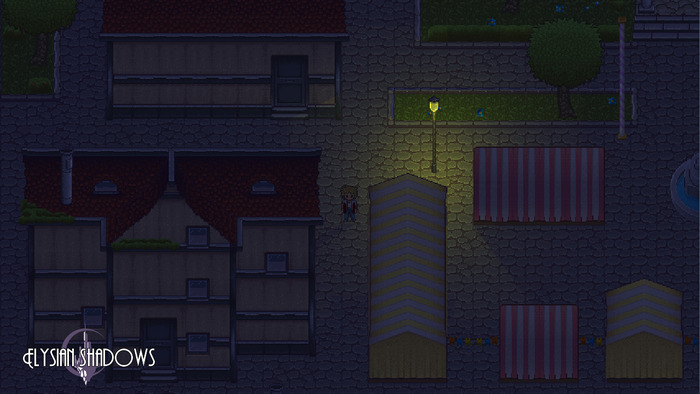
I love the shadows and how the game looks like pixelated life.

I love the shadows and how the game looks like pixelated life.

I really enjoyed taking in everything that Falco and the team were telling me, but what is the rest of the team like?  What do they do and who are they?

“We have 7 team members total:

Falco Girgis

Falco Girgis

 Falco Girgis is our engine and toolkit developer, and he’s also the one who developed the framework, allowing us to target so many platforms (including the Sega Dreamcast).  He’s basically the team mad scientist.  Falco loves the Zelda franchise, pretty much anything on the Dreamcast, and obviously all of the 16-bit JRPG classics.

Tyler Rogers

Tyler Rogers


Tyler Rogers is the gameplay engineer, who basically takes the art, music, and levels then puts everything together into a cohesive gameplay experience.  Tyler is very into Legends of Dragoon, Castlevania, and Final Fantasy tactics.

Daniel Tindall

Daniel Tindall


Daniel Tindall is our web developer and level designer, and he has been very much a secret weapon for creating our Kickstarter and Steam pages.  Dan’s favorite series is Metal Gear Solid.


Patryk Kowalick

Patryk Kowalick

Leandro

Leandro Tokarevski


Patrick Kowalik and Leandro Tokarevski are our two pixel artists, both self-taught and classically trained traditional artists who decided to get into game development to broaden their horizons through pixel art.


Connor Linning

Connor Linning

Connor Linning is our team rock star and audio composer, bringing with him a background in rock, metal, electronica, and survival horror music influencing his musical direction with Elysian Shadows.  Connor is obsessed with the Resident Evil and Silent Hill series.

Eddie Ringle

Eddie Ringle


Eddie Ringle is the team mobile developer, who has been the guy working on the OUYA, Droid, and even Google Glass builds of Elysian Shadows.

We aren’t just retro gamers either.  Falco is totally into the new adventure-style games: Uncharted, Tomb Raider, The Last of Us.  So good.”

It feels like I just put up a description of the A-Team, or something.  Hopefully each of these pictures gives you an idea who we’re dealing with here.  Each of these guys is immensely talented and putting everything they have to make something amazing.  I hope Ebert is rolling in his grave because if this isn’t art, nothing is.  Of course with the influence each of these games has had on the Team, what games have a direct influence on Elysian Shadows?

“There really is no single inspiration behind Elysian Shadows, and I kind of feel like that’s why it’s so special.  It’s why our team is so emotionally invested in the project.  We have all found our own ways to endow Elysian Shadows with a piece of what we like best in gaming, each of us growing up with different backgrounds and inspirations.  Obviously games like Chrono Trigger, Secret of Mana, Dragon Quest, Final Fantasy, and Phantasy Star have deeply inspired our direction, but there are quite a few more inspirations that aren’t even from the RPG genre.  Falco and Tyler grew up loving the Megaman Legends series, and it has influenced their direction with the whole “ruins” concept.  Even portions of the storyline.  Connor is a huge survival horror fanatic and, oddly enough, he’s found ways to endow ES with that kind of emotional tension through dynamic lighting.  Once we added jumping (initially inspired by Mario RPG), we quickly found ourselves able to design levels with influences from games like Super Mario and add combat moves from games like Megaman X.  I feel like there’s little pieces of numerous games influencing what we do with ES.”

So Elysian Shadows, almost literally, draws its lineage from the DNA of a widely-ranging gamut of games without any single influence dominating completely.  The more I hear about it, the more excited I get.  This isn’t just a game, it’s a love letter.  The kickstarter page has an amazing set of features.  Elysian Shadows Team has partnered with Pixellamp, which allows for impressive pixelated shadows.  The combat is set to be real-time and the gameplay will have a strong feeling of freedom.  Splicing 2D RPG and platformer elements, this game will go boldly where other games are limited from going.  There will also be a complete class or “job” system where characters’ innate strengths, weaknesses and gameplay styles can be augmented through a wide array of job-specific abilities and talent trees.  A lot of this is straight off the Kickstarter page, so you can go there and get the complete feeling for what backers are getting out of this.  They have samples of the music, the art and descriptions of various details planned for the game up there, too.  The initial goal is to reach 150,000$ with stretch goals all the way up to 800,000$.  And considering that last one would make this into an MMORPG, I hope we get as many additional backers as humanly possible.  They also have an entry on Steam Greenlight, so if you can’t put any money in, vote them up on Steam!  This is one vision that is extremely close to meeting its funding, and it threatens to shake the boundaries of games as we understand them.


A lot of this article has been lightly edited to flow as neatly as possible.  The message conveyed has been kept the same in all respects.

Lantern Forge, Dr Sandbox and Mr Hack ‘n’ Slash!

LF_logo


I swear to fucking god, if I play another goddamn sandbox again it will be all my fault, because I like sandboxes way too much.  Granted, last week was the unofficial “week of sandboxes” for me, so I am getting some time in with something more violent after this.  For now, this was a game that persisted in surprising the fuck out of me.  Seriously.  Every time I thought I had gotten to the furthest extent of content in this game, I got hit with more.  It isn’t listed as a pre-release title on Steam, but the devs are still adding content, Terraria-style, so it must be an Early Release.  Either way, this game could have fucking fooled me, because it has more flesh than my own personal ass post-Thanksgiving.

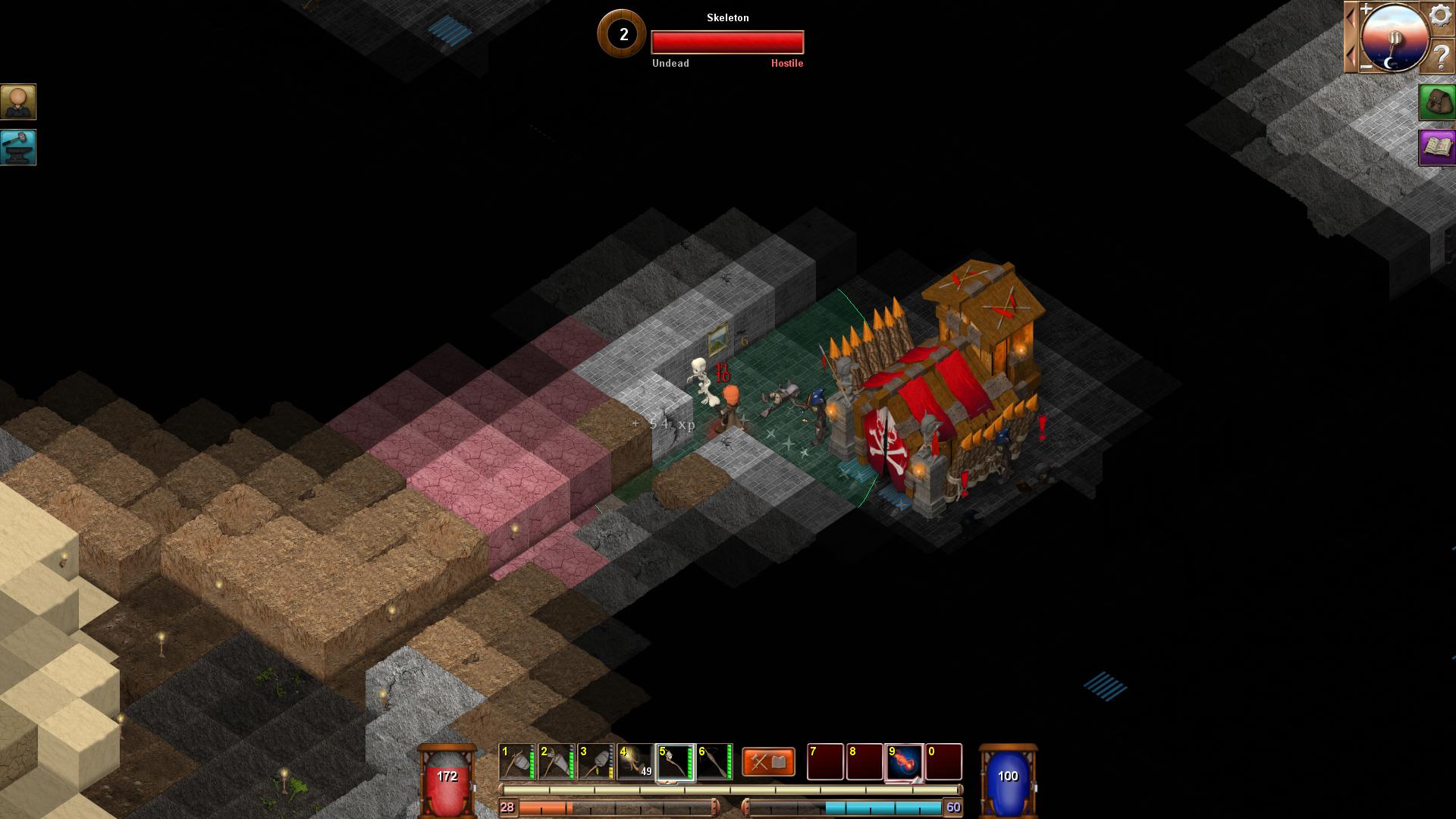
When you load it up, you are in the middle of tabula rasa, a clean slate just waiting for creativity.  One of the first things I noticed was how pretty the UI is.  I mean LOOK at it!  It has everything necessary for an RPG and a sandbox while having some high-speed options for quick-paced combat, and it plays well, too.  It focal feature is a little mode-toggle that is wedged between the hotbar and mana bar like my brother’s face in a dancer’s boobies at a strip joint.  Hit that baby and you go from fun-times-with-Mr-Rodgers sandbox to fuck-me-in-the face Hack ‘n’ Slash.  No joke.  Everything is pretty colorful, beautifully detailed world and a skillful procedural generation that somehow hides itself at first, but that button flips half your menu into blood-stained weapon of death!

It's a beautiful day in the neighborhood, mother fucker.

It’s a beautiful day in the neighborhood, mother fucker.

Take a gander around and you will notice that my house, the log building, and the workshop, the stone building with castle walls, have no floors.  One of the perks of a (sort of) pre-release.  That is ok, though.  And here is why.  Above you can see a fraction of what is possible in ths game, attained in about a full day of gaming.  You can build houses that are basically walls, windows and doors.  Your bed is the binding point where you respawn after death, and incidentally a time-warping machine of the future.  When you sleep, night turns into day, but it looks like you just walk over and look at the bed as time changes.  Given another efficiency feature of the game, you can do this through walls.  This feature is one of the elements of the sandbox.

Next to the blue toggle are four buttons.  The first makes visible your character’s range of influence, which is how far away you can touch things.  Educated guess puts this distance at about 10 fucking feet.  This guy rivals Garrett in the “characters with the longest arms” category, but again, this makes things like harvesting a grove of trees easy, so you can avoid being at dick-distance from each tree to cut it.  At first I thought I found a glitch, but then I stared to look over the buttons, and it all made sense.  The next two buttons say they rotate objects before you place them, but don’t be deceived by this low-down, dirty deceiver; it actually morphs the physical form of items being placed.  For instance, a log fence could become a single section, a corner of fence or  just a goddamn post.  Test this out with various items as the results are titillating.  Last is the sub-subterranean article induction rectifying selector or the STAIRS button because the only fucking thing you place between levels are the stairs!  I mean, if you want to get down to the shrieking charnelhouse of nightmares that is the underground, you’ll need to take the stairs.  Press the mode-toggle before you go, though, as you can’t fight in placement mode.

Blizzard called, they want their orc barracks back.

Blizzard called, they want their mercenary camp back

Granted, before you venture in the dark abyss that lies beneath, you’ll want good gear.  You can craft a wide range of items from the beginning, but the items you may craft are limited to what you can pick up off the ground.  And by “pick up off the ground” I really mean “beat into submission with your bare hands” as the animation seems to display.  Still, you can get loose stones, sticks (which are in fucking everything), logs and food on the surface, and the list goes on.  You can feasibly get a few levels before needing to venture downward, especially since it feels like there is an entire game up top.  Eventually you will want to make stairs down.  Now if you start near stairs, DON’T FUCKING GO DOWN THERE!  I did and I got my ass torn open by goblins.  Luckily the animation just has you pulse into nothing in a flash of light, presumably as Scotty beams you back to the Enterpr.. I MEAN.. your bed.  Building your own staircase is likely to lead down to a single claustrophobic space where you claw your way through the walls for air.. or you could just craft a stone pick and dig your way out, fucking lunatic.  Down here on the first level you can find copper, albeit sparsely populated, which will get you the necessary components for some workbenches.  Materials increase in availability the deeper you go, too, but so does difficulty.  Eventually you need to go down, but be prepared when you do and craft yourself some solid gear on a workbench.

Imagine there are half a thousand artistically detailed workbenches in this game, each with their own function and an impressive array of craftable items and you’ll be imagining… uh.. this game.  I even found a workbench that uses workbenches as crafting components.  It gets intense, but as you need to go deeper, so too do you need to get crafty.  My first workbench helped me combat my hunger bar through agriculture.  The gardening workbench lets you use fruits and flowers to make seeds and potted plants.  Now many things in Lantern Forge also have numerous uses: food-bearing plants can be turned into seeds, sticks are in fucking everything and stones are always useful.  It pays to never throw anything away, so it is a good thing there are as many types of chests as there are types of crafting materials.  Granted, eventually you will have more stuff than you know what to do with, so one really cool mechanic among the pile of awesome elements in this game is the Town Center.  The Town Center is that giant ominous lantern over a bottomless pit in the first screenshot.  This uses workbenches to craft shops that are associated to the functions of those workbenches.  Over-simplified example: a gardening workbench lets you build the farming supply shop.  This can then be placed to buy food, tools, seeds and plants for farming.  The best part is the shopkeepers rotate their stock, so the items in there always change as you play.  Honestly, I am not sure what Hearthfire Studios is trying to pull, but my brain almost exploded with all the shit there is to do in this game.

What Seuss-Lovecraftian nightmare did I just acid trip into?!

What Seuss-Lovecraftian nightmare did I just acid trip into?!

Just when you think you have seen it all, they come up with this shit.  A giant haunted dollhouse in the middle of a pink and purple field spewing out knitted doll-beasts that chase you into the next fucking biome.  Great.  Combat is pretty tough at first, but as you get higher in level and secure a handle on it, it becomes manageable.  You have three combat trees to pour skill points into: hunter for ranged, knight for melee and mage for magic.  They also threw in an adventurer tree and filled it with a variety of passive abilities that make exploration, sandboxing and everything in the fucking game better in general.  On the surface, you are less likely to run into enemies, unless you are a stupid screenshotting asshole that runs into the weirdest shit possible and takes pictures while evil dolls poke him with giant needles.  Yea, that’s me.  At night, however, the forest becomes populated with all sorts of enemies.  That’s why gear can really be important.  While you can only make stone tools at first, eventually you will get to iron and mithril.  These items are, in turn, used to get even more items which can open up new varieties of craftable items, both practical and cosmetic.

Everything about this game is fun.  The art and music work symbiotically to generate the ambiance of this game: colorful and bright at first glance, but as night falls, things get dark and ominous.  And at first, it feels like a winsome frolic in an idyllic land, but as you get deeper and deeper, you will realize there is really more to it.  To give you an idea, I was playing this game for nearly a full 24 hours and still only got to the second tier of technology, crafting in copper.  Granted, I like to really explore things, so I was going all out and getting loot, farming, cooking, crafting and making a town.  This game is gradual sandbox gameplay combined with challenging combat, which spikes in difficulty to keep you on your toes.  Overall, this game is worth every cent of the 9.99$ asking price on Steam and is a lot of fun for those with this taste.  It splices two genres into a coherent and instant-switch whole that holds its own on either mode.  I am not even a fan of anime, but this game’s subtle JRPG tones really bring out the lively feelings of this game and give it a unique flair that really entertains.  Even considering everything I have said about this game, there is still so much to explore and experience about it.  Play it yourself to see.  Thumbs up to the developers on this one; Lantern Forge deserves an adoring fanbase of its own.

Reus, Sandbox of Giants!

reus_logo


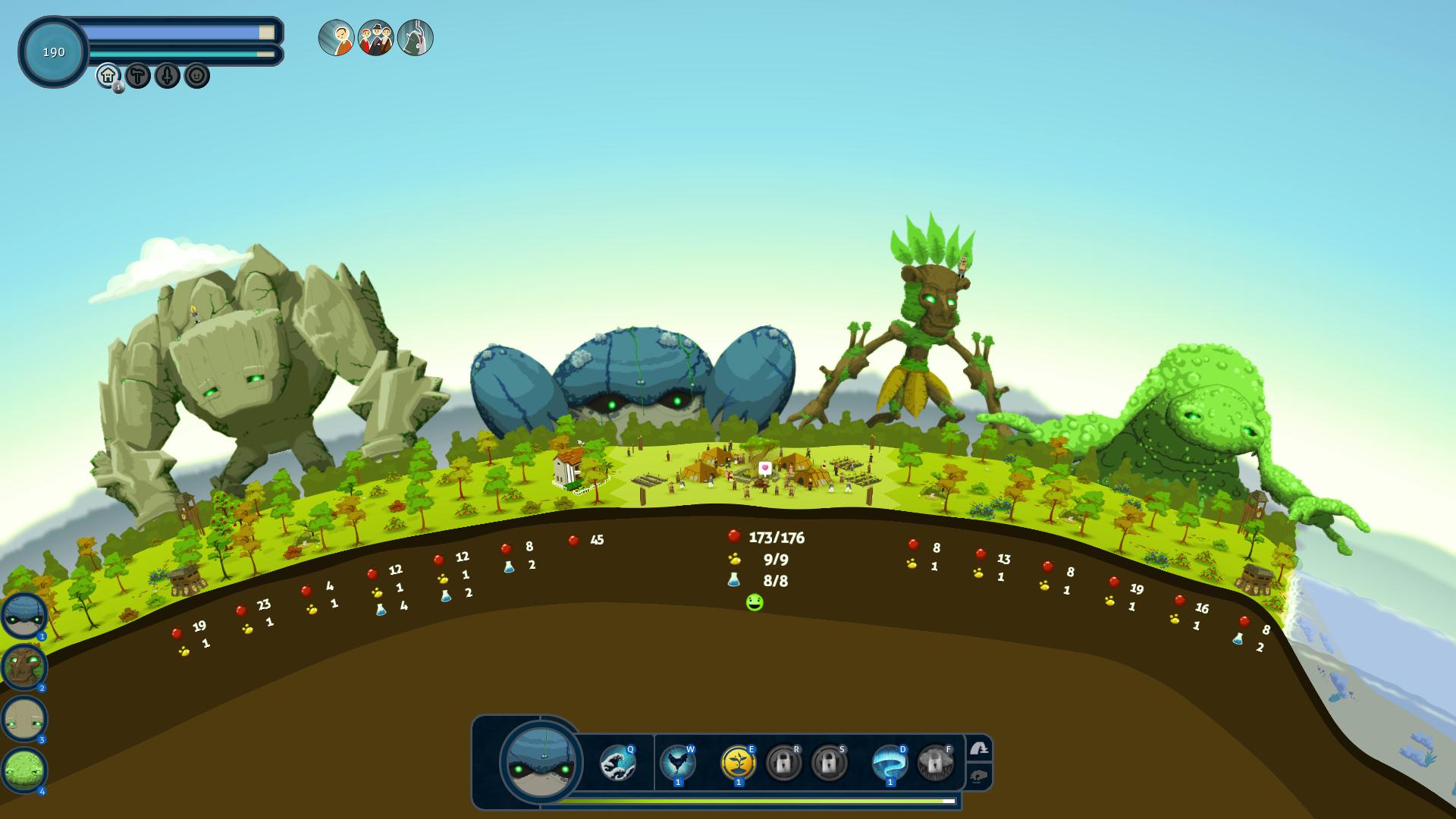
Reus is a game for hippies.  Rather than suggesting that the player represents the power of some god, as you might expect in a game of this nature, the player is suggested to be the planet.  Now, generally speaking, while a planet could be said to be a living organism, in Reus it cannot affect its own changes.  In order to make life, oceans, forests etc. you have to utilize four extensions of your planetary will: the rock giant, the ocean giant, the forest giant and the swamp giant.  Each has a unique set of abilities that have multitudinous effects on the land, which are limited only by your imagination.

There are the basics: ocean giant makes oceans, forest giant makes forests, rock giant makes mountains and the swamp giant makes swamps.  In order to create swamps and forests, you need water and the world you start on is a barren wasteland.  This means you need to make a couple oceans first.  Oceans will soak enough land on either side for you to create a full forest or swamp.  There is also the rock giant.  This burly fucker just lopes around like a badass all the time.  Use him to raise a mountain, and the side that faces an ocean will remain the same while everything past it changes into desert.  This can be used to destroy forests and if you make a mountain or ocean on a village, they all die.

The variety of wasteland shades go from a stunning grey to a lovely off-white

The variety of wasteland shades go from a stunning grey to a lovely off-white

Some of the less obvious abilities make a sort of sense.  The forest giant can make food plants and what comes out of it depends on where you put the plant.  In a forest it’s blueberries, in a desert it’s a dry bush (more on that later).  Despite looking like a monkey, the forest giant is fully unable to create animals.  The ocean giant makes domesticated animals.  These are things like chickens in the forest or desert tortoises in the desert.  At first you would expect the forest giant to make animals, but then when you realize that all life comes from the oceans originally, it makes a sort of logic.  Plus, why would a forest giant be able to make fish?  The swamp giant is another weird one: he makes exotic animals, but again, if you think about it, this makes sense too.  Swamps are dangerous places where some of the most fucked-up shit evolves.  That and Australia.  Swamps are where you find things like Bot Flies evolving.  The bot fly is something I will not discuss, but if you are fucking curious, check it out here.  It’s fucked up as all fuck.  Don’t say I didn’t warn you. FUCK!  I just read the page a bit too much.. grah..  Either way, weird shit evolves in swampy areas.

As well as making the exotic animals, the swamp giant can also make herbs.  These tend to generate more tech or wealth than fruit plants from the forest giant.  Your rock giant will also generate a variety of minerals resources.  Alongside all of these differing resource-types, Giants are able to enhance resources with aspects.  These aspects are things like the leaf aspect, which will allow the Forest giant to add natura or food to plants.  The ways these aspects affect different resources varies based on the region-type, but typically you can transmute a resources two different ways depending on the aspects you place on it.  Be careful, too!  Some resources have a symbiosis.  These things will work together to create a bonus to what it produces.  Having blueberries in range of chickens will make it so that the chickens generate more food.  If you change what resources are next to each other, you will change the symbiosis for your resources, destroying what you had working before.  The game quickly becomes about efficiently managing what you have growing on the land of your villages after a while.

Have Number 2 step forward and say "Ph'nglui mglw'nafh Cthulhu R'lyeh wgah'nagl fhtagn."  Thank you.

Have Number 2 step forward and say “Ph’nglui mglw’nafh Cthulhu R’lyeh wgah’nagl fhtagn.” Thank you.

The focus of this game is really on the villages, though.  The giants are just where you put all your powers.  Adding resources to the map makes villagers appear.  These villagers, in turn, build towns and settle lands and make the game fun.  All of the villages will start building various projects, too.  This might be a shrine, a granary or a school, and as they get higher level, they will start building higher-level projects.  Given that the effects of your giants’ powers vary based on what terrain-type you use them in, each village will have a different focus depending on where it is located.  Swamp villages tend to require tech for their projects where forest villages need food for theirs.  This isn’t always a set thing, but it all depends on what the villagers choose.  Each project is timed, too, and proper symbiosis match-ups will govern whether you meet the time-limits or not.  Once you finish a project, one of the villagers steps forward as an ambassador.  This person is someone that you pick up and allow to ride on you giants.  Having the little ambassador up there unlocks different abilities depending on where they are from and which giant they ride.  Properly managing which ambassador goes where will determine just how successful your villages will be.

This all sounds like a fun and free romp through a magical world, but there are dangers in this paradise.  The biggest among them is greed.  If your village gets too prosperous too fast, it will start to go ballistic and get dirty.  Eventually they will start attacking other villages and fucking everything up.  When this happens, you have options.  If you really really like that village, you can create “awe” among the villagers.  Do this through symbioses and properly locating different resources next to each other.  Another way to counter-act the greed of a village is with danger.  If you have desert tortoises in your area and you get wealthy and greedy, you might see the world as a desert tortoise that cannot keep up and is easy prey for the clever man.  If the giants transmute those tortoises into snakes, your ass will be too busy working on not dying a painful, poisonous death to make battle plans.  Finally, if your villagers just get too fucking greedy and are past redemption, you can always have the swamp giant launch mud bombs that burn with acidic death or send the rock giant to smash them into the dirt.  Granted,  the little bastards might just start fighting back after a while, so keep an eye on them.

Greedy little bastards...

Greedy little bastards…

Reus is a game that says a lot about people.  Those that want to work in unison with the world prosper and flourish in its favor.  Those that get caught up in their greed fight their peaceful neighbors, who are happy with what the world has given them, and are eventually vanquished to dust.  If they fight the will of the planet itself, they can win, but ultimately they just ravage and destroy the world, returning it to the barren waste it was in the beginning.  A great game and a truly interesting take on sandboxes, since it is a 2D game.  Well worth the 9.99$ asking price on Steam.

My biggest fucking issue with this game is how much memory it eats.  This thing is a memory beast.  I have 16 GB of memory in this computer and Reus still managed to crash it!  I was playing through the tutorials to understand the game.  I played straight through, got about halfway through the third one and BOOM!  blue screen fucker.  The only time I nearly ate my monitor in blind rage.

The Fall, Protocol Bypass Complex

Fall_logo


After buying this game at a discount along with some other games on Steam, I left it in my library, planning to look into it later and thinking it looked amusing.  Fast forward to a Sunday night, playing DnD with my friends, and two of those particular gentlemen start off on a gaming discussion.  I mean, I was typing furiously about games while slicing into dudes with a greatsword. Why not?  Artistic games came into the conversation, and they were off about various titles they enjoyed.  Then Jon swings a verbal hand across my face and tells me about The Fall.  He and Jay were proselytizing at length about this game. “Have you heard of it?” I drew a dull stare at the ceiling.  “No” I stated blankly. “It’s this game where you are an AI in a battlesuit and you have to override your functions to control them by putting your pilot in direct danger.” (this is where the little man in my head climbs the step ladder into my brain and pulls the chain to a light that flickers, dimly at first, to life) “OH YEA!” I exclaimed, “I bought that on Steam! So, it’s good?”  The look I received from those gentlemen told me it was an experience.  It was spectacular.  Thereby I have come to this article to concur with these allegations. And I do concur, most righteously.

The Fall is about the necessity of rules.  What do you become when you make a habit of breaking your own rules?  First, we talk about the game and if you are interested, we go deeper.  For that there will be spoilers, but fear not, I’ll warn you.  Let’s do this.

In The Fall you are an AI inside a suit.  After re-entering the atmosphere of a planet Master Chief-style, you awake in a dark cave.  Before breaking the surface, however, something significant happens: to keep the suit’s pilot from liquefying upon impact, the suit’s AI is allowed to activate the Anti-matter shield and protect the pilot.  Now this is the key point of the game.  If you go into the esc menu, hit operating parameters.  You’ll notice that there are several functions that are disabled, health monitoring of the pilot is damaged, but, most notably, the Anti-matter shielding has recently been activated.  The suit’s AI, whom you control in the game, is unable to access various functions of the suit without the pilot’s permission.  The pilot, however, has just re-entered the fucking atmosphere in a goddamn battle-suit.  That is obviously not the preferred method of atmospheric entry for a human body, so the pilot is a little unconscious at the moment.  Granted, the health-monitoring systems of the suit are knocked out, so we don’t even know if he’s still alive!  The AI doesn’t hear anything from her pilot so she decides to head out for the medical facilities to revive the pilot.  In the operating parameters there are three laws, based on the universal laws of Asimov governing robots: Must not misrepresent reality. Must be obedient. Must protect active pilot.

So easy a caveman could understand them

So simple a caveman could understand them

Now ARID, our AI babe, has some obstacles.  She has a pretty specific set of parameters with the addendum that her own systems cannot be accessed without permission from the pilot EXCEPT to protect the pilot from immediate danger.  Got it.  That is a pretty fucking important except, too.  There are a lot of problems that Arid encounters on this planet, most notably others trying to depurpose (destroy) her.  In order to maintain her own relevance and purpose, Arid has to get her pilot to the medical facilities.  To achieve this, she needs those restricted systems.  This means she has to put the pilot into imminent danger in order to override the systems and gain access.  How can this be allowed?  Well it is a matter of priorities and logic.  I have to protect the pilot.  My pilot is dying.  To properly protect the pilot from the danger of death, I must get him to the medical facilities. To get him to the med fac, I need to access restricted systems.  I can only access those systems if my pilot is in imminent danger from which those systems could save him, therefore, I have to put my pilot in imminent danger in order to gain access to those systems and save his life.  Fucking syllogisms.  Read that last sentence again: in order to save my pilot, I have to put him in danger.  Yea.  Begin decompiling, mother fucker.

This game defines the often decontextualized term “slippery slope”, except in this one, you were the pebble that started the avalanche.  Another fun little maxim this game hints at is the phrase “good intentions pave the road to hell”.  Shelley’s Frankenstein made it a thing, and that story made a habit of referencing Paradise Lost, a story about Satan falling from grace with God.  Arid invokes this maxim every time someone asks her about her primary function:

I am the A.R.I.D. onboard a Mark-7 combat suit.  My intentions are peaceful

– Arid, The Fall

I submit that this is the jumping point for the titular “fall” in The Fall.  Alright with the fucking literature lecture, back to the damn game.

From darkness you emerge...

From darkness you emerge…

The Fall as a game is still a lot of fun.  It blends a number of ludic features, those features generating the enjoyable and fun part of a game (or its most game-like features, if you will permit me), with its logic.  There are two genres at work here: Puzzle platformer and action shooter.  I don’t know how they fucking thought of this shit, but the game style literally changes with the flip of a switch.  You start off with a malfunctioning gun, but at least the flashlight still works fine.  Using this flashlight, you can uncover various points of interest.  Literally.  It is like someone took a little fucking stamp and left these tiny magnifying glass icons everywhere.  These icons tell you what you need to know about your surroundings.  They’re also how you will interact with the environment to solve puzzles.  A lot of the puzzles are pretty simple, some are tough and require thought.  I had to look up the solution to one puzzle, but I still beat the game in about 3.5 hours.

Once you get a working pistol, you can switch to the laser sight, which is combat mode.  In combat mode, you can get behind cover, vault over obstacles and bust a cap in some robotic motha’ fucka’s.  Your primary enemies are the security droids of the facility in which you’ve crash landed.  These are all droids that are following their primary functions perfectly, and this efficiency is maintained by the sinister caretaker.  You meet this guy early on in an interrogation chamber and he dogs you the entire way, throwing legions of robotic foes to sidetrack you every time you get hard on a solid lead in moving on to the next area of the game.  Combat is fun and challenging, despite the 2D look of the game.  It doesn’t feel forced and it makes sense, and you’re not jumping on anyone’s fucking head, either.  Another facet of combat is the ability to perform sneak attacks.  This is also pretty cool, since Arid grabs the enemy from behind, rips out their power core and uses it to power her pilot’s suit.  It is a neat and useful maneuver that adds to the gameplay.

Peek-a-boo!

Peek-a-boo!

Everything about the look of this game is well done.  First you have the art: every level and area is well-designed and interesting.  Your eyes will never get bored.  There is a lot of passion poured into every fucking detail of this game, and it comes through.  Each moment you are guided by the soft-blue light of Arid’s mask.  Then there is the music.  It goes from dark, ambient groans to shoot-em-up techno as soon as you launch into a fight.  It fits and it gives a sense of foreboding throughout the game.  The sound is well done.  All of the voice actors are believable and well-recorded and the sounds themselves fit each scenario seamlessly.  Everything about this game is polished and lovely, except for the odd “walking through a wall of rubble into an open dark chasm”.  That only happened once, and it wasn’t a big deal.  I just realized it wasn’t a thing, because everything else in this game is so well put together, I thought it was an actual room, or something.  This game is well made and thought-evoking.  It brings an experience that is tough to live up to.  It was also funded on kickstarter, too, so I am glad it beat a bowl of fucking potato salad.  You can pick it up on Steam for only 9.99$, and I highly recommend it.  The ending is a piece of work that will make your jaw drop.  So, on to the spoilers.

A lot of Jesus imagery in this game

A lot of Jesus imagery in this game…


And to tell you why, I will be issuing more spoilers than a car part company.  We have to go deeper.

DO NOT FUCKING PROCEED IF YOU WANT TO FIGURE THE ENDING OUT YOURSELF!!!!!!

There, bold, italics, centered on its own line: there is nothing that anyone can do to tell me I didn’t warn you.  Now, why all the Jesus stuff?  Well, to do that, we have to tell you the ending.  So you spend all your time in The Fall trying to get your pilot, Colonel Josephs, to the medical facilities.  Arid’s health monitoring system is damaged, so she just assumes that the pilot is not responding because he is unconscious.  She never investigates further.  In the name of saving your human pilot, you deactivate and drain all the power from hundreds of stored droids (which the mainframe AI calls killing them), kill a hive queen of these hive slugs and kill some fish that can bite through metal.  You are also dogged by the Caretaker, an insidious droid that seems to be nailing humans to crucifixes, dissecting them and all kinds of other mean and nasty things.  However, he is functioning fine.  He was just left as the sole caretaker of a facility forgotten by its owners, so he keeps on doing what he is supposed to be doing: making the facility more efficient.  Those people were not efficient, especially after some of them were abandoned at the facility (check out the carving in the front desk in the lobby c/o Levi the ex-maintenance guy) and the Caretaker depurposed them.  As for the dissections, he was doing to the people what he might do to the robots: look for salvageable parts.  It’s just a messier prospect when you are filled with sloshy, meaty bits.

So you do all of this in the name of Colonel Josephs, the man in the suit.  Arid only invokes the name of the man in the suit toward the end, when the mainframe AI tells her not to change her parameters in the lab.  This is apparently necessary to finish the last task in a repurposing evaluation, to make it so she can lie.  You know, misrepresent reality?  One of her most basic principles?  She gets to the medical bay, gets scanned and what does she find out?  The man in the suit was never there.  She is malfunctioning after all.  Took her a while to get there.

How does this relate to Jesus?  Arid does some pretty horrible things (killing various animals, destroying the last dying remnants of an ancient facility, violating some corpses and even removing the power core for another actual soldier in a combat suit) for the sake of the man in the suit.  She doesn’t know he is there, and since the health monitoring systems are damaged, she just assumes he is in there.  And toward the end this man in the suit even has a name.  She truly believes Josephs is there.  Despite this belief, she was willing to put him in mortal danger.  He would have been the one that died, not her.  He becomes a sort of sacrifice that redeems Arid of her sins (or faults in programming).  Josephs represents something that Arid is willing to sacrifice everything for.  Something she believes in to the point where she is willing to destroy the elements of her basic programming that bind her and give her purpose.  That is really poignant, too.  Just as Lucifer was willing to defy the tenets of God to enact his own agenda, Arid is willing to supplant the laws governing robots, created by Isaac Asimov, to achieve her own imaginary goal of saving Josephs.  The humans on the cross represent a non-existant ideal for which Arid risks it all.  And the theoretical man in Arid’s suit is the one she is ready to put in danger to override her systems, so she is, in effect, using her belief in this man to breakdown the basic rules of her existence.  Yea.  Just let that shit percolate for a minute.

One of the most interesting triumphs of this game is how they made Arid so human without adding a human.  She makes frequent “self-evaluations” and often comes to the conclusion that she needs to be formatted and serviced before being returned to her dock.  In human terms “I am not doing the right thing, I need to stop and look at this, I need my head checked!”  But then the screen has a moment of electronic spazzing and she corrects herself stating that these things were necessary to save Josephs, she is doing this to save him.  She is robotically reassuring herself against what she recognizes as the invalidity of her own actions and programming.  The main difference, though, is that people don’t always take these personal self-evaluations and look at themselves.  It is often too painful, and in Arid’s case it is no different.  She just performs it on a more logical level, being an AI in a robot suit and all.

This is something that we’ve seen time and again in real life: people changing the rules to make them suit an end that they deem as sacred.  Holy wars, for example.  They’ve gone by many names: crusades, jihads or whatever.  These are terrible things done in the name of a sacred ideal.  Arid is an excellent choice of name to this degree since Arid means “devoid of moisture”.  To allow a bit of poetic latitude to Over the Moon, it would mean devoid of anything, specifically true purpose.  Not just devoid of the moisture created by a human body.  And this relates to Frankenstein really well.  Take that Arid to mean moistureless, like a corpse reanimated.  They wouldn’t be juicy, especially if they were kept in embalming fluid like Dr. Frankenstein’s body parts undoubtedly were.  Just like the good Doctor, Arid sacrifices her basic tenets and uses good intentions to justify some horrible actions.  And in both cases the being left is a monster that wreaks havoc on an arguably torn world.  But it is the world that the characters in the story have.  It is self-sustaining, to a point, if far from perfect.  Who are these two to destroy what it has become?

I am bound by nothing...

I am bound by nothing…

So at the end, when Arid, by her own words, is bound by nothing, she tears off the helmet of the suit and show that she is empty.  That is the answer to the question at the beginning of this article.  What do you become when you make a habit of breaking your own rules? I wanted to phrase it “What do you become when you make a habit of breaking your own rules for an imaginary purpose?” but that is a little too suggestive.  I mean you need the chance to play it yourself to really get the full effect.

Arid represents the purpose of intention when it is backed by meaningless goals.  It doesn’t matter what you intend to do, if you violate everything to include the basic laws of your own life to uphold a universal concept of sacredness, you are exactly what you are bound by: nothing.

If you have read this far, I apologize and thank you for hearing me out.  It is a lot to read.

4PM, Where’s your emotionally devastated, alcoholic daughter?

capsule_main


Roger Ebert was a movie critic who died sternly maintaining the position that video games were not art and never could be considered art.  To be perfectly honest, with all his years of experience with the artistic medium of film, it is easy to see why, nearing 70, he was unable to conceive of games as art.  In an article from his own journal, aptly entitled Video Games Can Never Be Art, Ebert details the reasons, in his mind, that games can never be art.  But asking Ebert, a man in his 60’s at the time who is entrenched in years of film appreciation, is the equivalent of asking a person that adores mexican food to try a fusion cuisine including mexican, asian and Hawaiian styles.  Simply stated, his years of experience in the film industry had Ebert inured against the kind of forward thinking required to take that next step into games as art.  He spends the article calmly explaining why various games are not art, comparing them to Chess and other simple games.  He looks at the game mechanics and trivializes about them without exploring the ideas and the implications of what this actually means about the characters, and the player as a participant.  This would be like me going to a movie and saying “This is just a piece of entertainment projected onto a public screen.  It couldn’t be art, look how fake it is!” while millions of people after watching 12 Years a Slave would be well within their rights to politely disagree.  It doesn’t matter how many accolades and degrees I possess in another, venerable medium.  But this shows the level of his own ignorance, frankly.  This man who achieved lifetime achievements in film and is widely regarded simply could not conceive of games as an artistic medium because they are not relevant to him.  And that is ok, but it makes him and his input irrelevant to any conversation concerning games as an art form.  This article will be one of those discussions.

4PM is a game made by Bojan Brbora that discusses how we deal with grief.  You play a woman, named Caroline, who is on the very last threads of her own rationality.  From the look of the game, it is very clear that she is a heavy drinker.  Everything has a thick, hazy hangover look to it.  Caroline stumbles out of bed with her slow gait and rolls a bottle in the sink, joking about skipping breakfast.  Her life is in tatters, her minimalist apartment is a mess and her answering machine is full of messages from voices brimming with concern.  There are pills and cigarettes on her nightstand, the window is open: everything in her life seems to have a sense of reckless abandon.  When you start up the game, it has a heavy sense of itself with a dark soundtrack.  Even the tutorial leads you to the edge of a tall rooftop where your character blacks out to a scene where she is driving.  It goes black again, you hear what sounds like something hitting a car in the middle of the day on a busy street.  Someone screams and the game starts.

Make cute jokes into the mirror as your own tear-soaked countenance glares back at you.

Make cute jokes into the mirror as your own tear-soaked countenance glares back at you

There are very few ludic sequences in this interactive experience that one might point at and ridicule as non-artistic.  The places where these sequences exist are very feasible, dark and almost humorous.  Honestly, each one evokes a number of emotions for anyone that might have a similar experience.  There is the party scene where you have to find the toilet before the timer runs out and you vomit where you are standing from over-indulging.  Your character dances some and tries to buy another drink, but is flagged by the bartender.  Granted, I’ve never been there, but I have certainly ended a couple nights of drinking over a toilet.  As Caroline stumbles around, the room seems to spin and undulate as the music booms and the haze of the alcohol closes in around her.  I have never felt so claustrophobic in an open setting before.

Go ahead, just puke in the flower pot.  No one will notice.

Go ahead, just puke in the flower pot. No one will notice.

Another sequence features Caroline at work where she sees a few options that suit her better than getting her work done.  She could move over to a personal computer where a fresh game of Arkanoid awaits, or she can sneak a few drinks in from her personal stash of whiskey in one of her drawers.  After playing a little arkanoid and downing my drinks, I am ready to try sneaking out of the office, it seems.  Just don’t get caught by that douchey little prick Keith.  The fucker is patrolling the hallway, making this a tense scene where you realize just how deep into depression and desperation this woman has fallen.  She is ready to risk her own livelihood just to sneak out and have some alcohol.  It is sad and frightening.

As you make your way out to the stairway, you see a man cast you an impassive glance as he continues up to the roof.  Extremely unsettling.  You have the option to pursue your vice to the bar below the office, or pursue the curious man up to the roof.  These choices decide how the rest of your day goes and, invariably, the rest of your life.  Without spoiling too much of the ending, should you go up to the roof, you pick up pieces of this man’s life and discuss with him in an attempt to bring him back from the brink.  I have had a number of friends that contemplated suicide and even had to call the police to intervene on one occasion.  Talking someone back from the edge is difficult, especially when your immediate plans were to just go get wasted during the work day and tap out.

Just think about it.

Just think about it.

Everything about this experience speaks to how video games are truly art.  Perhaps the interpretation of ludic games vs. artistic works is a little undefined, but there is definitely something more to these pieces than irrelevant critics of other artistic media are willing to admit.  The fact is that art evokes emotions and makes you consider yourself in a new lens, one you might not have otherwise entertained.  4PM is a testament to videogames as a method of conveying that level of experience.  Sometimes it is not enough just to see something happen on a screen, because you can walk away from that experience.  I can watch a movie like 12 Years a Slave, be deeply affected by the story of Solomon Northup and be brought to tears.  But in the end it is a movie and I can walk away from that.  Although 4PM is about a woman dealing with grief, it is powerful, not because it challenges anything in society, but because it challenges me.  Because it is an experience that I have, and an experience in which I participate is something I cannot just walk away from.  Such an experience, real or virtual, is one that I will take as a part of myself for the rest of my life.  This experience is 4.99$ on Steam.

The only thing that I really found problematic about this game is, depending on the choices you make and what you do in the game, your ending might differ from the one suggested in the game’s tutorial.